
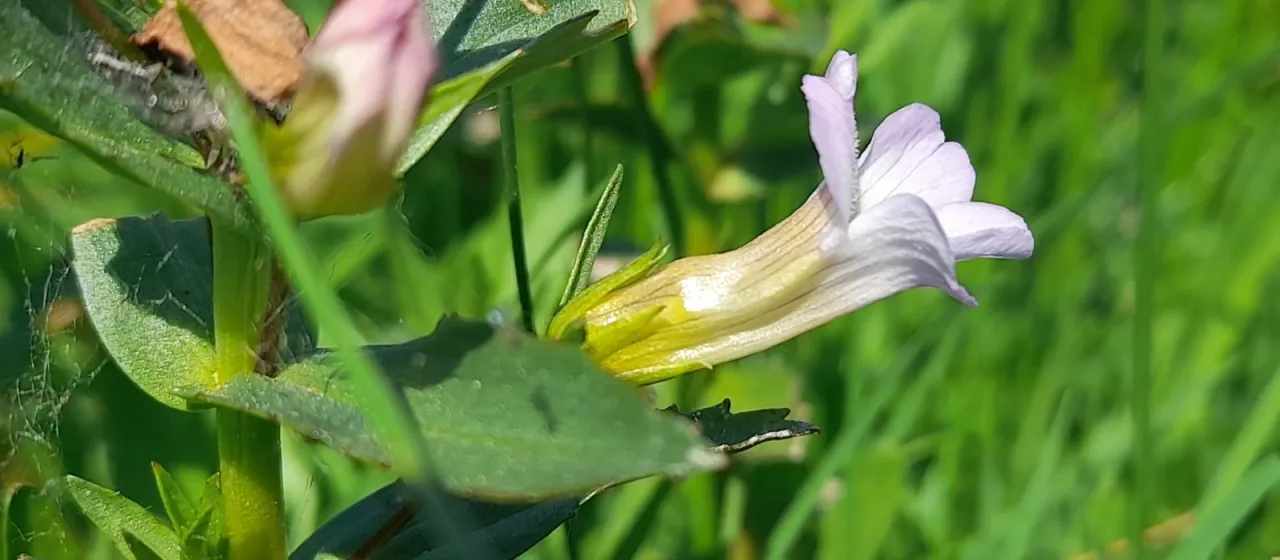
Description
Gratiola officinalis, commonly known as the hedge-hyssop, is a perennial herbaceous plant belonging to the Plantaginaceae family. Historically, it has been used in traditional medicine, although it is widely recognized for its potent toxicity. The plant is characterized by its creeping rhizome and vertical stems, which allow it to spread effectively in suitable habitats.
The natural range of this species spans across temperate regions of Europe, Central Asia, and parts of North America. It predominantly grows in wetland areas, such as the margins of lakes, riverbanks, and marshy meadows. It thrives in environments where the water table is constantly high, reflecting its ecological adaptation as a moisture-loving species.
Botanically, the plant features square stems that can reach heights of up to 40 cm. The leaves are opposite and lanceolate, while the solitary flowers, which bloom from early summer to autumn, display a distinct white or pale yellow color with subtle purple veins. These unique traits make the species relatively easy to identify in the wild.
Cultivation requirements for Gratiola officinalis are restrictive, necessitating soil with high organic matter content and consistent, high moisture levels. While it is rarely grown as a commercial crop, experimental efforts focus on soil stabilization in moist areas or specific medicinal harvests. Propagation is primarily achieved through the division of rhizomes during the dormant season.
In terms of agricultural significance, the hedge-hyssop is often viewed as a noxious weed in livestock pastures due to its toxicity, which can cause severe cardiac distress if ingested by animals. However, it retains a place in pharmaceutical research due to its glycoside content, which provides bioactive compounds used in controlled therapeutic applications under strictly regulated conditions.
- Prefers damp, nutrient-rich soil environments.
- High toxicity limits use as livestock forage.
- Utilized in specific pharmacological research for glycosides.