
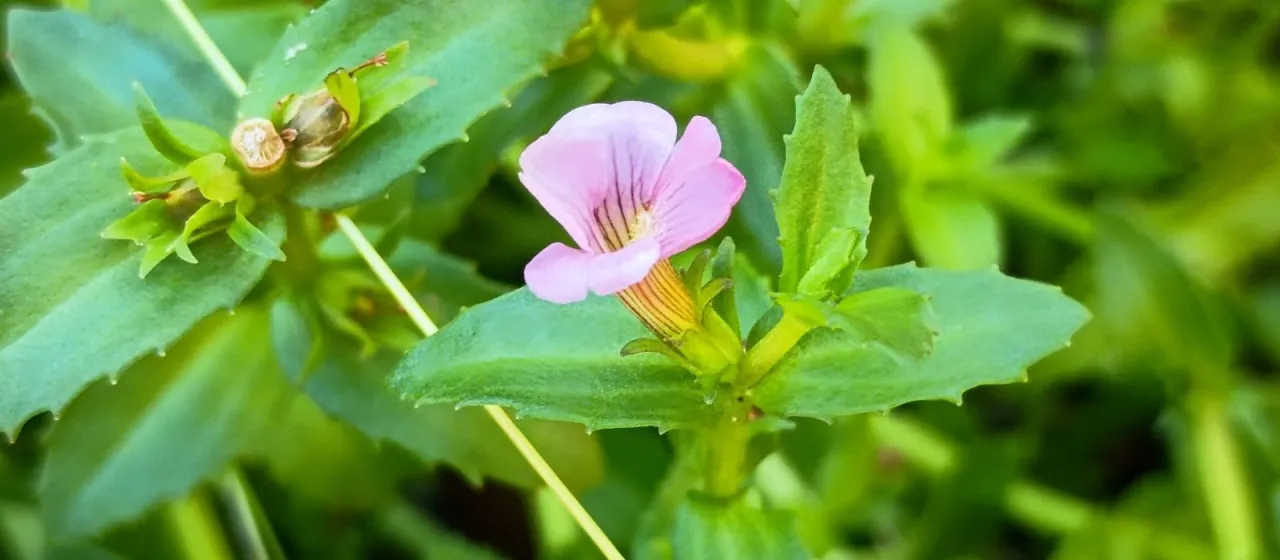
Description
Peruvian hedgehyssop (Gratiola peruviana) is a perennial herbaceous plant belonging to the Plantaginaceae family. While not a conventional agricultural commodity, this species is of significant interest in ecological engineering, environmental restoration, and aquatic landscaping due to its specific physiological adaptations to saturated soil conditions.
The plant originates from South America, with established populations also found in Australia and New Zealand. It naturally inhabits wetlands, riverbanks, and marshy meadows. Its geographic range demonstrates a high level of adaptability to diverse water-rich habitats, making it a robust species for specific environmental niches.
Botanically, Gratiola peruviana is characterized by its succulent-like, erect stems and opposite leaves. The flowers are typically white to pinkish and tubular, serving as a distinct visual identifier. The plant utilizes creeping rhizomes for vegetative propagation, which allows for dense colony formation in ideal soil conditions.
Cultural requirements for Peruvian hedgehyssop revolve around high moisture availability. It thrives in loamy, nutrient-rich soils that remain perpetually damp or submerged under shallow water. The plant performs best in full sunlight to partial shade; however, soil drainage must be restricted to prevent the plant from entering a drought-induced dormancy phase.
Economically, the species is primarily valued for its role in biofiltration and erosion control along water bodies. Despite its potential benefits, it is classified as containing specific glycosides, which render it potentially toxic to livestock. Therefore, agricultural management must include periodic monitoring to prevent it from becoming an aggressive invasive weed in pastures or irrigation systems.