
Description
Guadua amplexifolia is a species of giant woody bamboo belonging to the Poaceae family, subfamily Bambusoideae. This species is highly regarded for its remarkable mechanical strength and rapid biomass production, making it a significant plant for forestry and agricultural development in tropical regions.
Originating from Central and South America, this bamboo thrives in warm, humid climates. Its natural distribution is tied to tropical rainforest zones, where it is often found along riverbanks and in areas with high annual precipitation. The plant is not frost-tolerant, limiting its cultivation to tropical and subtropical latitudes.
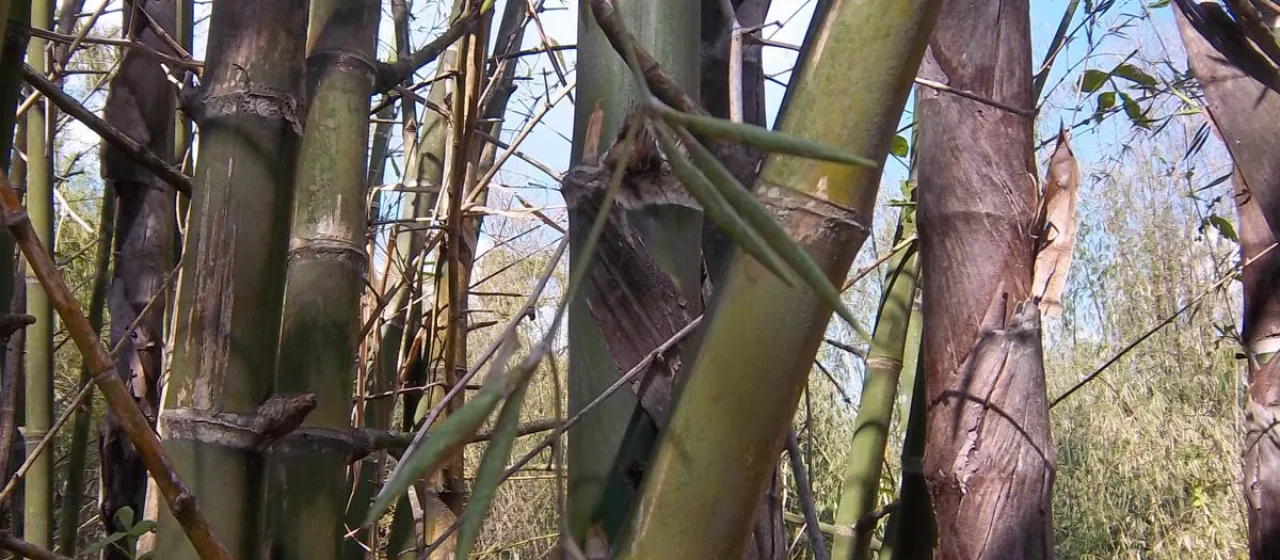
Botanically, Guadua amplexifolia is characterized by its woody, hollow culms that can reach substantial heights. The distinctive feature of this species is its culm sheaths, which wrap tightly around the stem. The root system is a robust rhizome structure that allows the plant to form dense, persistent clusters that effectively stabilize soil and slopes.
Regarding agronomic requirements, the crop demands well-drained, fertile soil with a slightly acidic to neutral pH. While it requires significant moisture, it does not tolerate waterlogging for extended periods. Propagation is primarily achieved through rhizome division or culm cuttings, as natural seed production is infrequent and germination rates can be inconsistent.
The industrial and agricultural applications of this species are extensive:
- Construction material for durable, earthquake-resistant architectural frameworks.
- Raw material for the pulp and paper industry due to high fiber quality.
- Production of high-end flooring, furniture, and sustainable interior design components.
- Environmental conservation, particularly in riparian buffer zones to prevent soil erosion.
Common phytosanitary issues include fungal infections during periods of excessive humidity and poor ventilation within the grove. Pests such as borers and spider mites can affect the quality of the culms. Effective management involves regular thinning of mature stems to promote airflow and the timely removal of necrotic tissue to maintain the health of the entire cluster.