
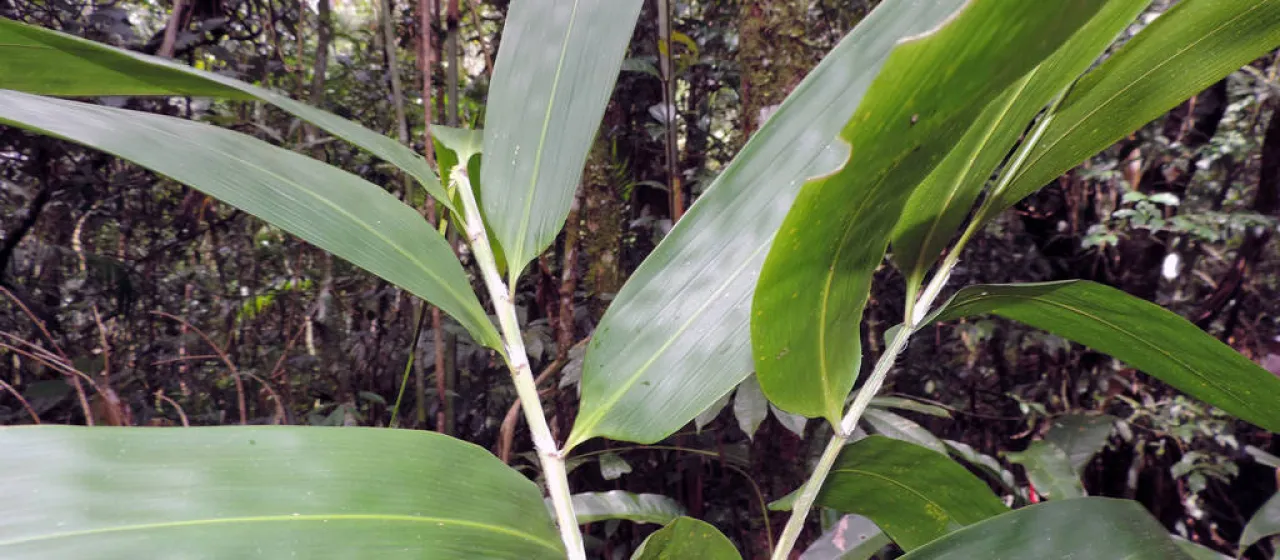
Description
Guadua tagoara is a giant bamboo species belonging to the Poaceae family. Renowned for its remarkable strength and rapid development, it stands as one of the most significant plant resources in tropical environments. This bamboo species can grow into dense, monolithic structures that serve both ecological and industrial purposes.
Native to the tropical regions of South America, specifically in areas such as Colombia and Brazil, this plant thrives in humid conditions. It requires a specific climate characterized by warm temperatures and significant annual rainfall. Because of its native environment, it is highly sensitive to frost and extreme drought, which limits its primary cultivation area to tropical and subtropical zones.
The botanical structure of Guadua tagoara is defined by its thick-walled, hollow culms that grow in clumps. Unlike woody trees, these culms reach maturity relatively quickly, often within a few years. The root system is a complex network of rhizomes, providing stability to the plant and helping to prevent soil erosion, making it an excellent choice for environmental restoration projects.
Agronomic requirements include deep, fertile, and well-drained soils rich in organic matter. Cultivators must ensure proper spacing between plants to allow for airflow and optimal growth. Regular irrigation during dry spells is crucial for young plantations, while nutrient management through organic mulching helps sustain the high growth rates associated with this species.
In terms of economic utility, this bamboo is widely considered a premium construction material, often referred to as "vegetable steel." It is utilized in structural engineering, residential construction, furniture manufacturing, and paper production. Its ability to sequester large amounts of carbon also adds significant value to its cultivation as a sustainable agricultural commodity.
- Exceptional tensile and compressive strength.
- Rapid biomass accumulation.
- High efficiency in carbon sequestration.
- Versatile application in sustainable architecture.
Common pests and diseases include specific bamboo mites and fungal pathogens that affect the culms, especially in poorly managed, overcrowded stands. Maintaining proper distance between clumps and ensuring adequate sunlight penetration are the most effective ways to prevent such issues. With consistent monitoring, Guadua tagoara can remain a productive and long-lasting crop for many decades.