
Description
Holywood lignum-vitae (lat. Guaiacum sanctum) is a slow-growing evergreen tree species belonging to the Zygophyllaceae family. It is renowned for its remarkable hardwood, known historically as one of the hardest and densest timbers in the world, which naturally contains resinous oils providing self-lubricating properties.
The native range of this species extends across the tropical regions of the Americas, specifically including southern Florida, the Caribbean islands, and Mexico. The tree thrives in limestone-based, well-drained soils and is well-adapted to seasonally dry environments, demonstrating excellent drought tolerance once the root system is established.
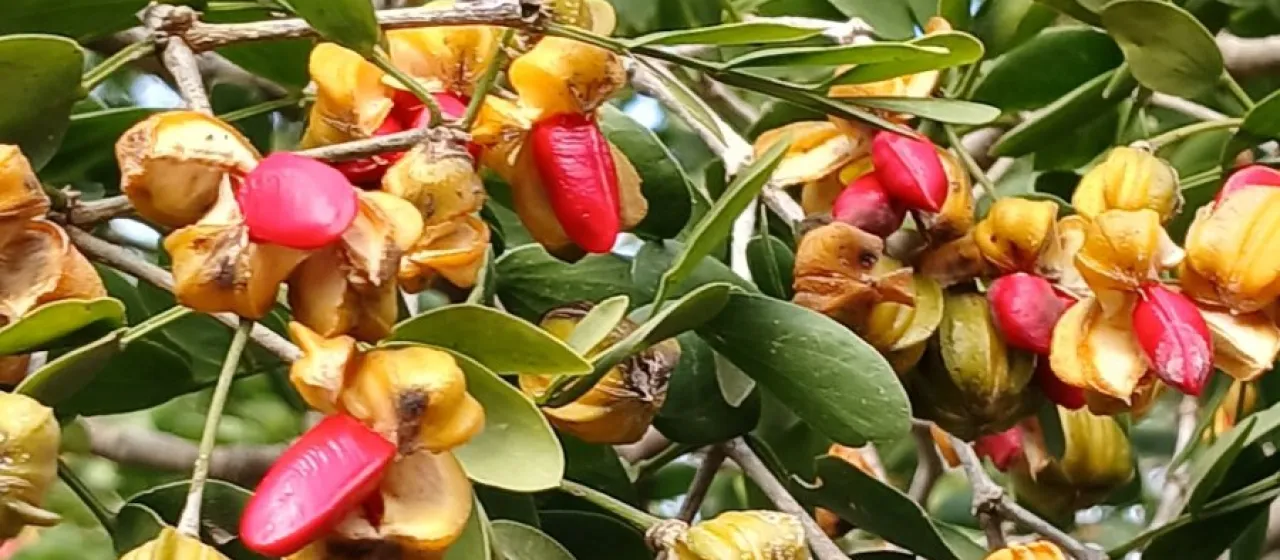
Botanically, the tree exhibits pinnately compound leaves with distinct leaflets and displays beautiful blue to purple five-petaled flowers. After flowering, the tree produces fleshy, orange-yellow fruits that contain seeds with red arils, which are a characteristic feature used in identifying the species during the maturation phase.
In terms of cultivation, Guaiacum sanctum requires full sun exposure and well-drained substrate. It is highly sensitive to root rot, so careful irrigation management is critical, especially for young saplings. While growth is exceptionally slow, the tree is long-lived and does not require intensive fertilization, making it a sustainable choice for certain tropical agroforestry projects.
The primary economic use is centered around its wood, which has been historically used for high-precision industrial components like propeller shaft bearings and bushings. Additionally, the plant has medicinal uses in traditional pharmacopeia for treating inflammation. Despite its durability, the species faces risks from specific pests such as scale insects and may suffer from root pathogens if soil aeration is insufficient.