Creeping baby's breath
Gypsophila repens L.
Description
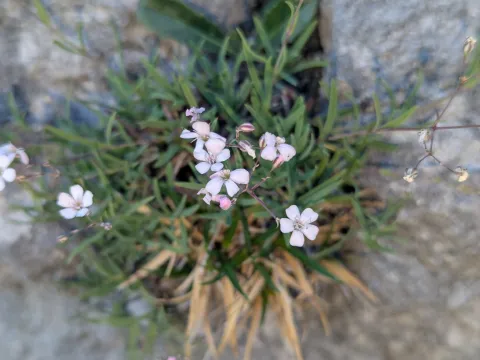
Creeping baby's breath (Gypsophila repens L.) is a perennial herbaceous plant belonging to the Caryophyllaceae family. In horticultural practice, this species is highly regarded for its ground-covering properties and its ability to thrive in poor, rocky conditions where many other plants fail to survive.
The plant originates from the mountainous regions of Central and Southern Europe. Its native habitat includes alpine meadows and rocky slopes, which has shaped its physiological adaptation to intense sunlight, well-draining soils, and significant temperature fluctuations characteristic of high-altitude environments.
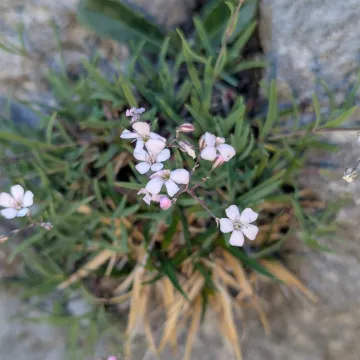
Botanically, it is a low-growing subshrub featuring creeping stems that reach heights of 10 to 20 cm. The foliage is narrow and glaucous, providing a pleasant texture. The plant produces dense clusters of small, star-shaped white or pale pink flowers during the summer blooming season, effectively masking the ground with foliage and color.
Cultivation requirements focus on providing full sun and perfectly drained, neutral to slightly alkaline soil. Because it is a drought-tolerant species, irrigation should be limited to the establishment phase. Overwatering is a common mistake in the management of this crop, as it leads to root rot and loss of plant vigor.
The primary agricultural and horticultural use for creeping baby's breath is as a stabilizer for rocky landscapes, rock gardens, and embankments. Regarding health management, the plant is relatively pest-resistant, though it may be susceptible to aphids or spider mites. Maintaining good air circulation is the best preventative measure against fungal diseases.
Photo gallery