
Description
Haplopteris elongata is a distinctive species of epiphytic fern belonging to the Pteridaceae family. Often referred to as a ribbon fern due to its linear, strap-shaped leaves, this plant is an excellent example of tropical flora adaptation, specifically designed to thrive in high-humidity environments.
This fern is native to the tropical and subtropical regions of Southeast Asia and Australia. In its natural habitat, it grows as an epiphyte on tree trunks or in crevices of damp rocks, where it accesses moisture and nutrients from decaying organic matter and mist. The plant typically occupies the understory layer, requiring filtered or shaded light conditions.
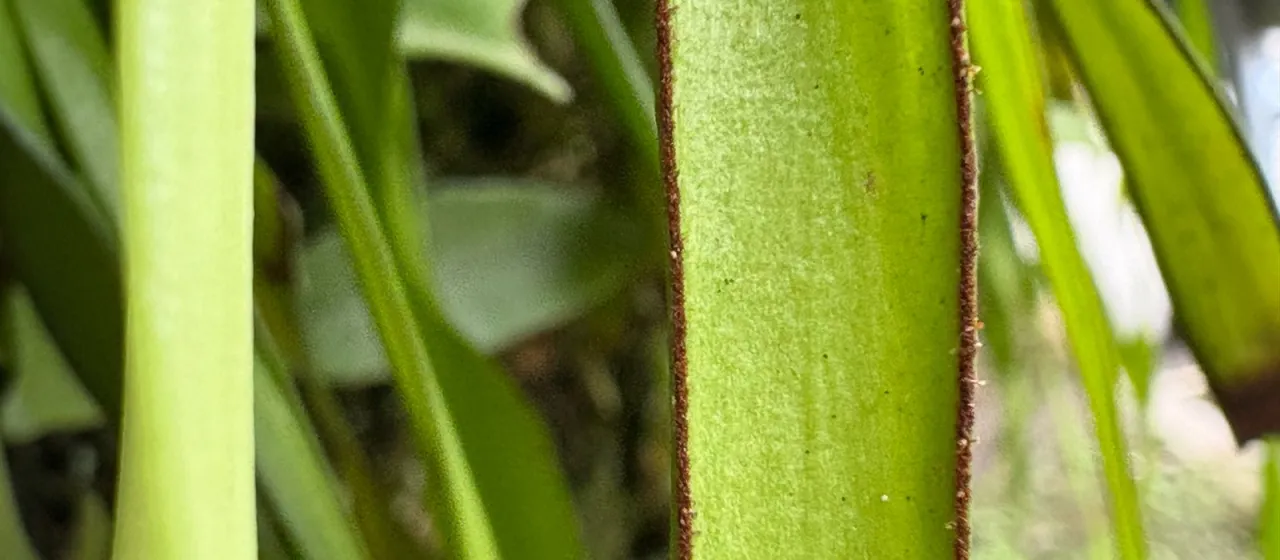
Botanically, the species is characterized by its long, simple, undivided fronds that grow from a creeping rhizome. The spores are typically produced in linear sori running along the leaf margins, which is a key morphological feature for identification. Its structure allows it to efficiently capture moisture from the air while remaining anchored to vertical surfaces.
When cultivating Haplopteris elongata, it is crucial to mimic its natural environment. The growing medium must be highly porous, such as a mix of orchid bark, peat, and charcoal. Essential care includes maintaining a consistent ambient temperature (around 20-25°C) and ensuring high humidity levels, often requiring the use of a humidifier or a closed terrarium system.
The primary use of this fern is in botanical collections, interior landscaping, and specialized terraria. It is highly valued for its elegant, minimalist appearance. Like many ferns, it is susceptible to pests such as mealybugs and scale insects if the air is too stagnant. Maintaining proper ventilation and hygiene within the growing space is vital to prevent fungal outbreaks and rot.