
Description
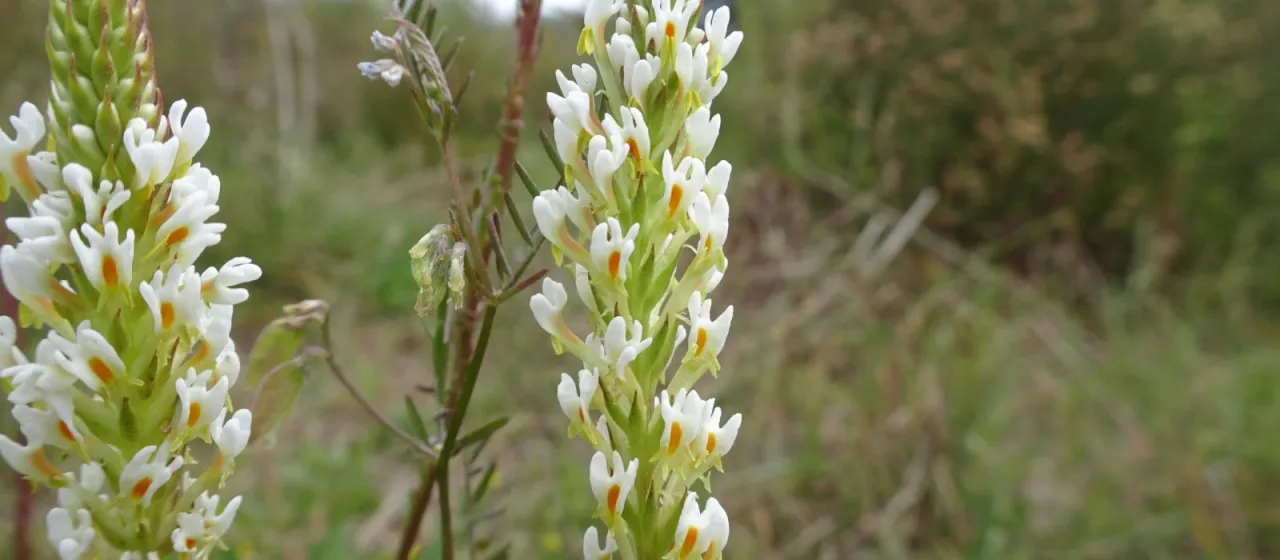
Hebenstretia integrifolia is an attractive ornamental species belonging to the Scrophulariaceae family. Renowned for its fragrant white flowers with orange-red centers, this plant is a favorite in garden design due to its long blooming period and its ability to attract pollinators.
Native to South Africa, the plant has adapted to various environmental conditions in its homeland. While it is a perennial in warmer climates, it is typically grown as an annual in cooler regions. Its origins in African landscapes define its preference for well-draining soils and ample sunlight exposure throughout the growing season.
Botanically, it presents as a branching subshrub reaching heights of approximately 40–60 cm. The leaves are linear to lanceolate and arranged in an alternate pattern. The inflorescences are dense, terminal spikes. Each individual flower is tubular with a distinct, brightly colored spot in the throat, which adds significant visual interest to the plant's spikes.
Agricultural and gardening requirements focus on mimicking a Mediterranean or warm temperate climate. The plants demand full sun and thrive in sandy, gritty soils with excellent drainage. Watering should be deep but infrequent to prevent root rot, which is the most significant physiological risk for this species. During the active growth phase, a balanced, low-nitrogen fertilizer helps support flower production.
Regarding health management, Hebenstretia integrifolia is relatively resistant to pests. However, in poorly ventilated environments or high-humidity greenhouse conditions, it may suffer from powdery mildew or infestations of spider mites. Maintaining dry foliage and good air circulation is essential for a healthy crop. It is highly recommended for rock gardens, container gardening, and border displays where its scent can be fully appreciated.