
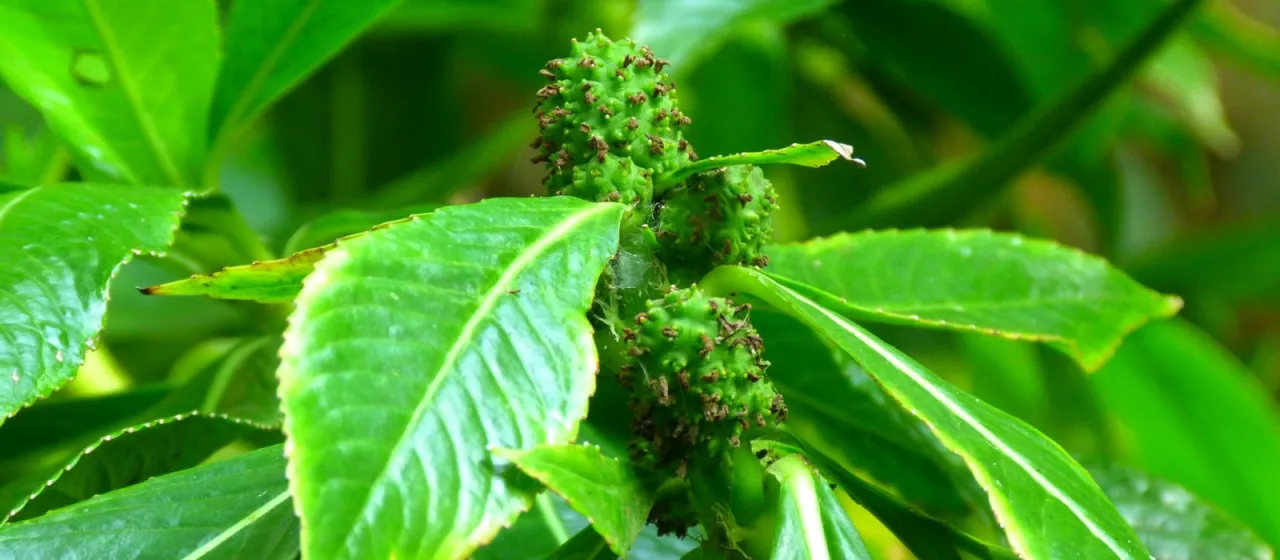
Description
Hedyosmum mexicanum is a perennial evergreen shrub or small tree belonging to the Chloranthaceae family. This species is recognized for its unique aromatic properties and serves as an important subject of study within its native ecosystems due to its distinct chemical composition found in its foliage and fruits.
The plant originates from the highland regions of Mexico and Central America, thriving in humid montane forest environments. Its distribution area is characterized by cool, misty conditions and consistent rainfall, which are essential for maintaining the vegetative growth of this species in its natural habitat.
Botanically, Hedyosmum mexicanum is distinguished by its opposite, serrated leaves and the development of stipular sheaths around the stem nodes. The species is dioecious, with male flowers arranged in catkin-like inflorescences and female flowers developing into fleshy, berry-like structures that are vital for local avian biodiversity and seed dispersal.
Cultivation requirements involve providing a well-draining, acidic, organic-rich substrate and protection from extreme temperature fluctuations. Effective agrotechnical management requires consistent soil moisture levels and high atmospheric humidity. It is typically suited for greenhouse or specialized controlled-environment agriculture where light intensity can be moderated to mimic forest canopy conditions.
From a хозяйственное (economic) perspective, this plant is primarily utilized for its traditional medicinal values, including its potential use as an antiseptic and aromatic agent. While not a large-scale commercial crop, it remains significant in ethno-botanical studies. Typical phytosanitary concerns include root rot under poor drainage conditions and susceptibility to foliage pests common in tropical greenhouses.
- Requires high ambient humidity to thrive.
- Sensitive to waterlogging and soil compaction.
- Essential role in local traditional ethnobotany.
- Propagated through seeds or semi-hardwood cuttings.