
Description
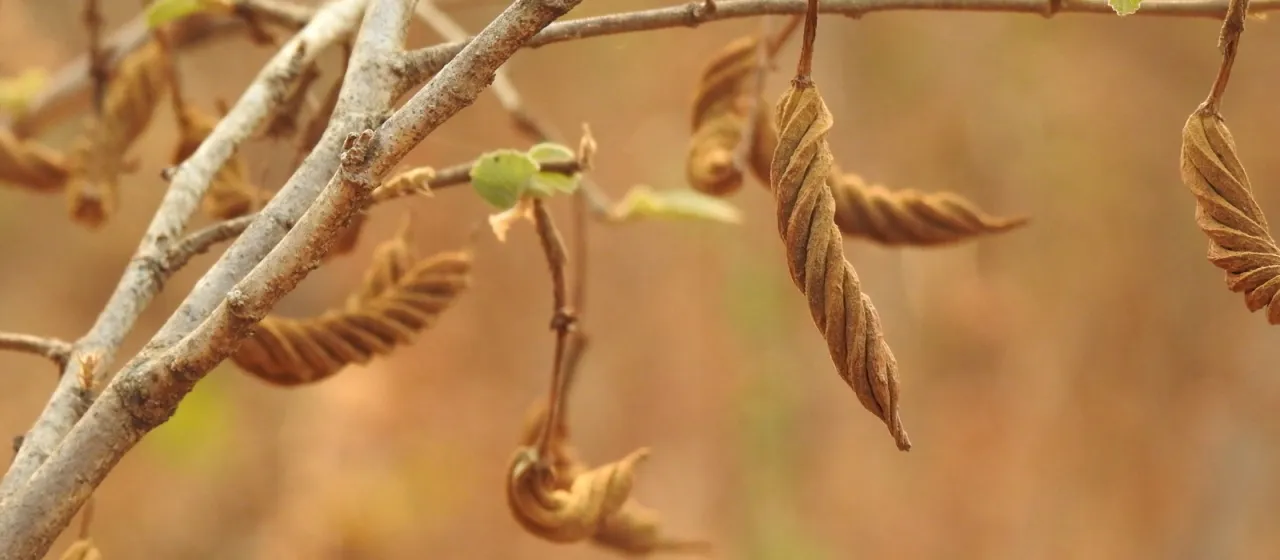
Helicteres isora, commonly known as the Indian screw tree, is a perennial shrub belonging to the Malvaceae family. The plant is widely recognized for its distinctive, spirally twisted fruit pods, which act as a key botanical identifier and are responsible for the genus name, rooted in the Greek word for "twisted".
This species is native to tropical regions of Asia, primarily found in India, Sri Lanka, and Southeast Asia. It thrives in open deciduous forests and secondary scrublands. Its range of cultivation is largely concentrated in tropical climates that provide alternating wet and dry seasons, to which the plant is highly resilient.
Botanically, the plant is a woody shrub that typically grows to a height of 2 to 3 meters. It features simple, alternate, heart-shaped leaves that are serrated. The flowers are zygomorphic, shifting from bright red to blue-grey as they mature, which makes the plant visually distinct during its blooming period.
Cultivation requires well-drained soils and high sun exposure. While the crop is known for its hardiness in marginal soils, consistent agricultural management is necessary for commercial yields. This includes proper spacing during planting, periodic pruning to prevent woodiness, and ensuring adequate drainage to avoid root rot during monsoon periods.
The economic significance of Helicteres isora is categorized into several sectors:
- Textile fiber production: The bast fiber is extracted from the bark for ropes and cordage.
- Pharmaceutical industry: Its fruit and roots are utilized in traditional systems for anti-diabetic and anti-inflammatory properties.
- Agriculture: Used for hedge planting and erosion control in arid environments.
- Livestock: Certain parts of the plant are evaluated for fodder potential in specific regions.
Pest management is an essential part of the cultivation cycle. The plant is prone to attacks by various lepidopteran larvae that damage foliage, as well as sap-sucking insects like aphids. Diseases are typically limited to root rot and powdery mildew, which can be mitigated through proper soil management and the application of organic fungicides if necessary.