
Description
Herissantia (Herissantia tiubae) is a resilient technical crop belonging to the Malvaceae family. Recognized for its potential as a source of high-quality vegetable fiber, it has gained attention for its ability to thrive in challenging environments where traditional fiber crops struggle to survive.
The native habitat of Herissantia tiubae is primarily located in the semi-arid regions of South America, particularly Brazil. Through evolutionary adaptation, the plant has developed robust survival mechanisms, including deep root structures and physiological responses that allow it to remain productive under significant water stress.
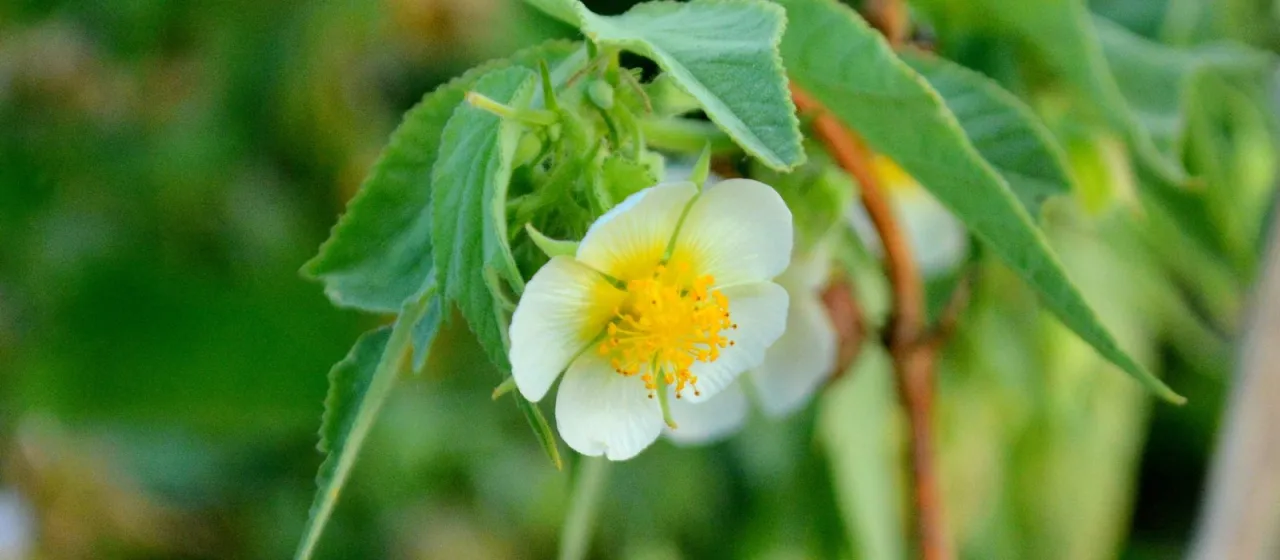
Botanically, the plant is a shrub with a strong, fiber-rich stem structure. The leaves are typically pubescent, which serves as a protective layer against excessive sun and heat. Its flowering phase and seed production are well-coordinated with environmental cues, ensuring reliable propagation in its natural ecosystems.
Agricultural practices for this crop focus on soil stability and early-stage weed control. Due to its inherent drought tolerance, the crop does not require intensive irrigation systems. Farmers typically plant in rows, ensuring correct spacing to maximize the biomass yield of the main stem, which is the primary economic component of the plant.
The main industrial use for Herissantia tiubae is the extraction of bast fibers. These fibers are strong and durable, making them suitable for rope manufacturing, industrial packaging, and composite materials. Ongoing research is also exploring the potential of its biomass as a sustainable feedstock for bioenergy and cellulose production.
- Exceptional drought resistance.
- Adaptability to poor and degraded soil types.
- Low requirement for chemical fertilizers.
- High potential for sustainable fiber production.