
Description
Hertia cheirifolia is a perennial subshrub belonging to the Asteraceae family. This resilient plant is recognized for its ability to thrive in harsh environments, making it a subject of interest for both botanical research and arid-land landscaping.
The plant originates from the arid regions of North Africa, specifically countries like Algeria and Tunisia. It is well-adapted to life in desert and semi-desert conditions, having developed specific physiological mechanisms to survive in areas with minimal annual precipitation.
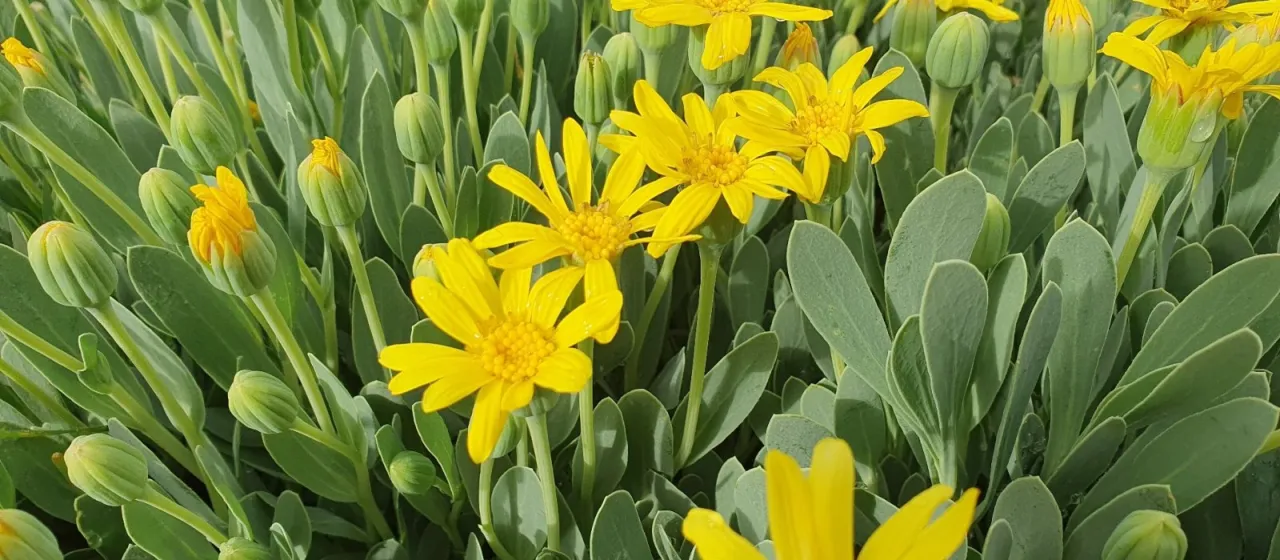
Botanically, Hertia cheirifolia is distinguished by its succulent-like, thick glaucous leaves that help in water retention. Its growth habit is low-lying and dense, while the flowering stage features bright yellow composite flower heads that stand out against its foliage, usually appearing in the spring season.
In terms of cultivation, the plant demands well-drained, sandy or stony soils with a neutral pH. It is crucial to avoid heavy soils that retain moisture, as the roots are highly susceptible to rot. In agricultural settings, it requires full sun exposure and minimal irrigation to mimic its natural native environment.
Regarding its utility, Hertia cheirifolia is primarily used in ornamental gardening, particularly in xeriscaping and sustainable garden design due to its low water requirements. It serves as an excellent ground cover for stabilized slopes. Common pests include mealybugs, while improper drainage remains the most significant threat to plant health, often leading to fungal root pathogens.