
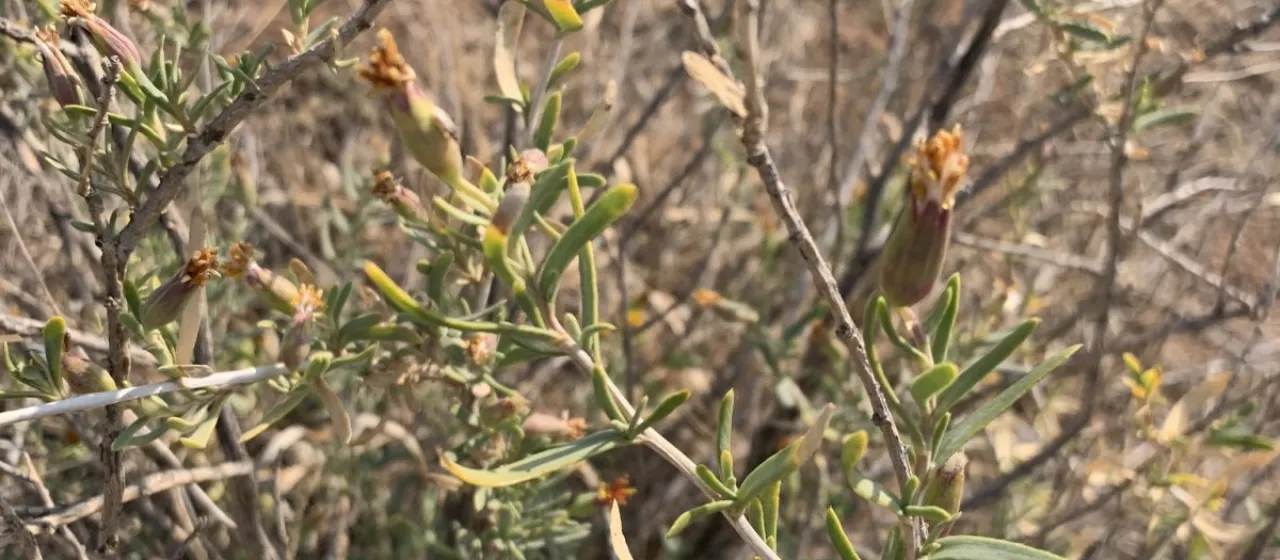
Description
Hertia pallens is a perennial subshrub belonging to the Asteraceae family. As a specialized agricultural crop, it is recognized for its unique ability to thrive in extremely arid environments, exhibiting succulent-like features that distinguish it from traditional field crops.
The plant originates from the arid regions of Southern Africa, where it has evolved to withstand long periods of drought and high temperatures. Its natural distribution is primarily found in desert and semi-desert habitats, making it a highly specialized plant for regions with minimal agricultural infrastructure.
Botanically, Hertia pallens is defined by its thick, fleshy leaves and stems that store water efficiently. It produces small, yellow capitula typical of the Asteraceae family. The root system is extensive and deep, enabling the plant to access sub-surface moisture and stabilize itself in sandy or rocky substrates.
Agrotechnical requirements for this crop focus on high light exposure and superior drainage. The soil must be loose, sandy, or stony to prevent moisture accumulation around the roots, which is the most critical risk for the plant. Excessive irrigation can lead to rapid fungal infections and root rot, necessitating precise water management.
In terms of agricultural utility, Hertia pallens is utilized primarily as a forage plant in natural pasture settings, providing sustenance for small ruminants in arid landscapes. While it is generally robust against environmental stressors, farmers must monitor for potential pests such as sap-sucking insects during the primary growing season to ensure optimal crop health.