
Description
Heterotis decumbens is a perennial herbaceous plant belonging to the Melastomataceae family. In agricultural and horticultural practices, it is recognized primarily as a vigorous ground-covering species, often used in tropical regions to manage soil cover and enhance land productivity.
The species originates from the tropical zones of Africa and the Americas. It is naturally adapted to moist environments, thriving in wetlands, riparian corridors, and tropical forests where high humidity and consistent moisture levels are prevalent throughout the growing season.
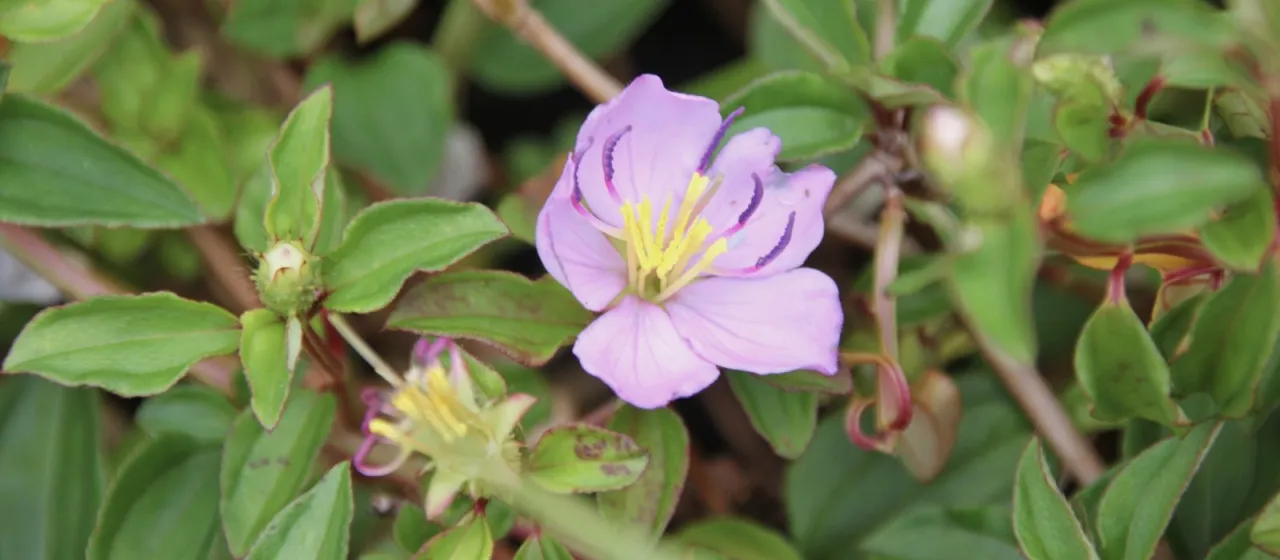
Botanically, Heterotis decumbens is defined by its prostrate stems that develop adventitious roots at the nodes upon contact with the soil. Its leaves are opposite, displaying the distinct longitudinal venation characteristic of the Melastome family. The plant produces vibrant, aesthetically pleasing flowers that contribute to its utility in specialized agricultural landscapes.
Agricultural requirements for successful cultivation include high thermal ranges and a reliable water supply. The plant lacks cold hardiness and will perish in temperatures approaching freezing. Optimal growth is achieved in well-drained but consistently moist, organic-rich soils with a slightly acidic to neutral pH level.
The main commercial and ecological uses involve soil stabilization, prevention of erosion, and ornamental ground cover in tropical forestry or plantation management. Typical threats to the crop include fungal leaf spot diseases resulting from poor air circulation in humid conditions and infestations by common sucking insects such as aphids.
- Rapid vegetative propagation.
- High demand for soil moisture.
- Sensitivity to extreme cold.
- Preference for dappled shade or indirect sunlight.