
Description
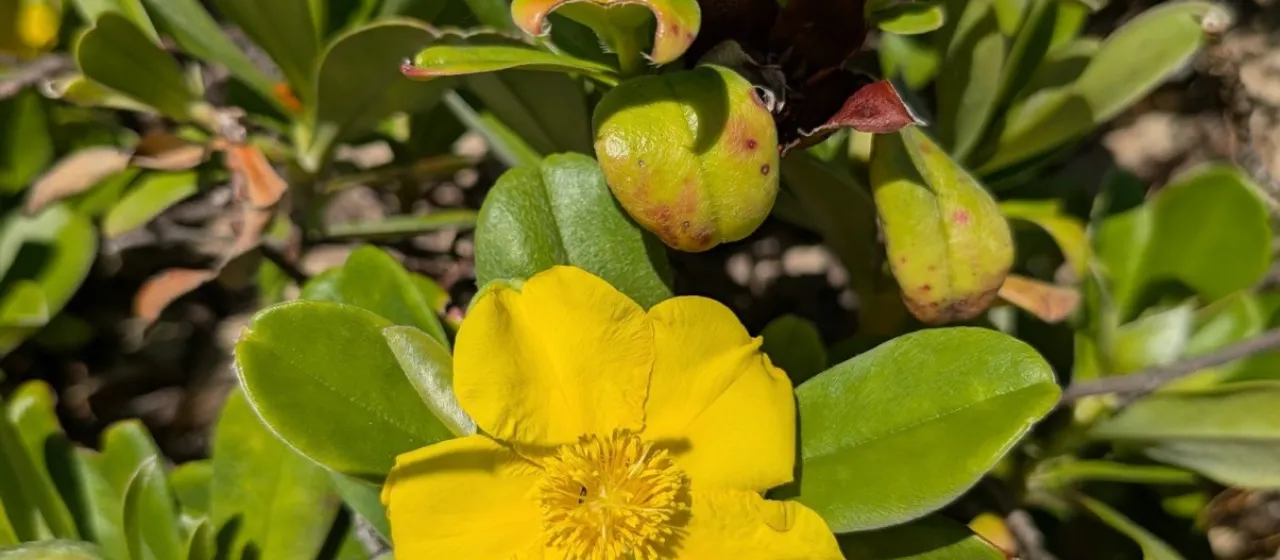
Snake vine (Hibbertia scandens) is a robust, evergreen climbing plant belonging to the Dilleniaceae family. It is widely recognized for its vigorous growth habit, featuring long, trailing stems that can climb trellises or serve as an effective ground cover in landscapes.
Originating from the coastal regions of eastern Australia, this plant has adapted to survive in diverse environments, including sandy dunes and forest margins. Its natural resilience has made it a favorite choice for horticulturists across warm-temperate regions, where it thrives in gardens and public green spaces.
The botanical profile of the snake vine is distinguished by its glossy, dark green foliage and spectacular large, bright yellow, five-petaled flowers. The blooms typically appear throughout the warmer months, adding significant aesthetic value to the garden structure through their size and vibrant color.
Cultivation of Hibbertia scandens requires adherence to specific agricultural practices:
- Selection of a site with full sun to partial shade for optimal blooming.
- Well-drained soil to prevent waterlogging, which is essential for root health.
- Regular irrigation during establishment and periods of high summer heat.
- Routine pruning to manage the size and encourage a denser, more attractive habit.
Regarding its utility, the snake vine is primarily used for ornamental landscaping, particularly for covering unsightly fences, retaining walls, or as a stabilizing ground cover for sloping embankments. It is highly resistant to salt spray, making it a perfect candidate for coastal horticulture. Pests such as spider mites and scale insects may occasionally affect the plant, and poor drainage remains the most common factor leading to root pathogens.