
Description
Sweet holy grass (Hierochloe redolens) is a perennial grass species belonging to the Poaceae family. This aromatic plant is highly valued for its sweet, vanilla-like scent caused by high concentrations of coumarin, which remains prominent even after the plant is harvested and dried.
The species originates from the Southern Hemisphere, naturally inhabiting regions in South America, New Zealand, and surrounding islands. It typically thrives in damp environments, such as wetlands, riparian zones, and moist meadows, where its rhizomatous root system allows it to form dense, resilient colonies.
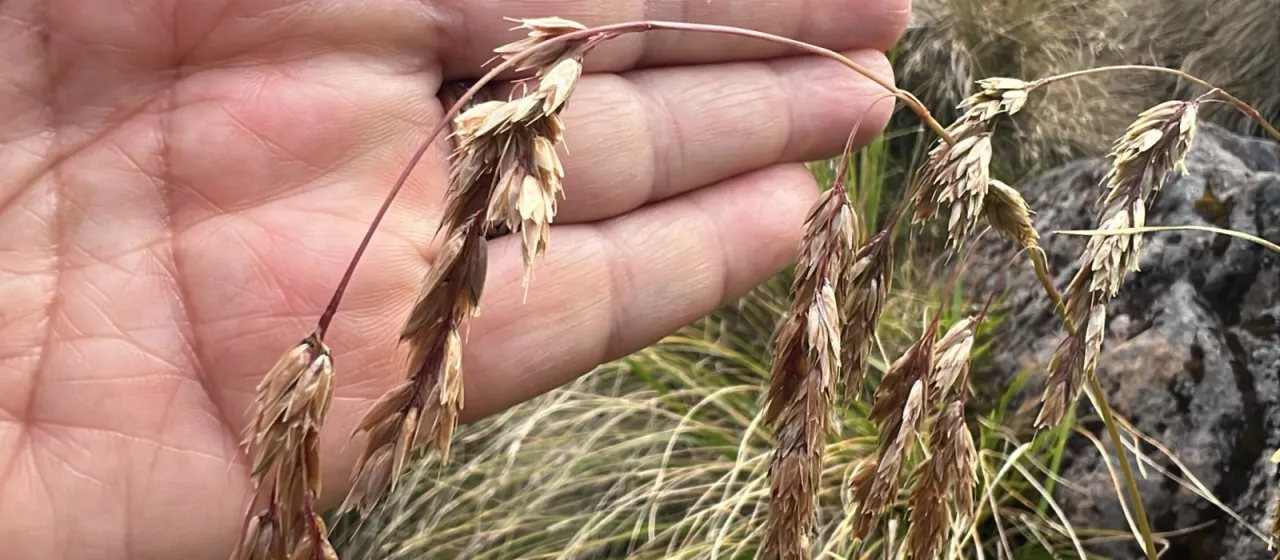
Botanically, this grass features slender, upright stems typically reaching 50 to 80 centimeters in height. Its leaves are flat, smooth, and vibrant green, while its inflorescence develops as a loose, golden-brown panicle. The plant is hardy and adapts well to various temperate climates, maintaining its vigor over many growing seasons.
Cultivation requires specific attention to moisture levels, as the plant performs best in soils with high water retention capacity. While it prefers sunny locations, it is tolerant of partial shade. Agrotechnical management involves regular weeding during the establishment phase and ensuring adequate soil hydration, especially during peak growth months to prevent stress.
The primary agricultural applications of Hierochloe redolens include the production of essential oils and natural flavoring agents for the food and beverage industry. It is widely used in the distillery sector for spirit aromatization. The plant is relatively resistant to pests, but producers should be mindful of fungal diseases like rust that can occur if air circulation is poor or if the soil is excessively waterlogged.