
Description
Hudsonia ericoides, commonly known as the pine barren golden heather, is a perennial, low-growing evergreen shrub belonging to the Cistaceae family. While not a commercial crop in the traditional agricultural sense, this plant is highly regarded in specialized horticultural circles for its unique ability to thrive in extremely nutrient-poor, sandy environments where few other species can survive.
The native distribution of this species is primarily centered along the eastern coast of North America. It is typically found in habitats such as coastal sand dunes, sandy pine barrens, and open, exposed rocky outcrops. These regions are characterized by high solar radiation, wind exposure, and acidic, rapidly draining soils, to which the plant has developed excellent physiological adaptations.
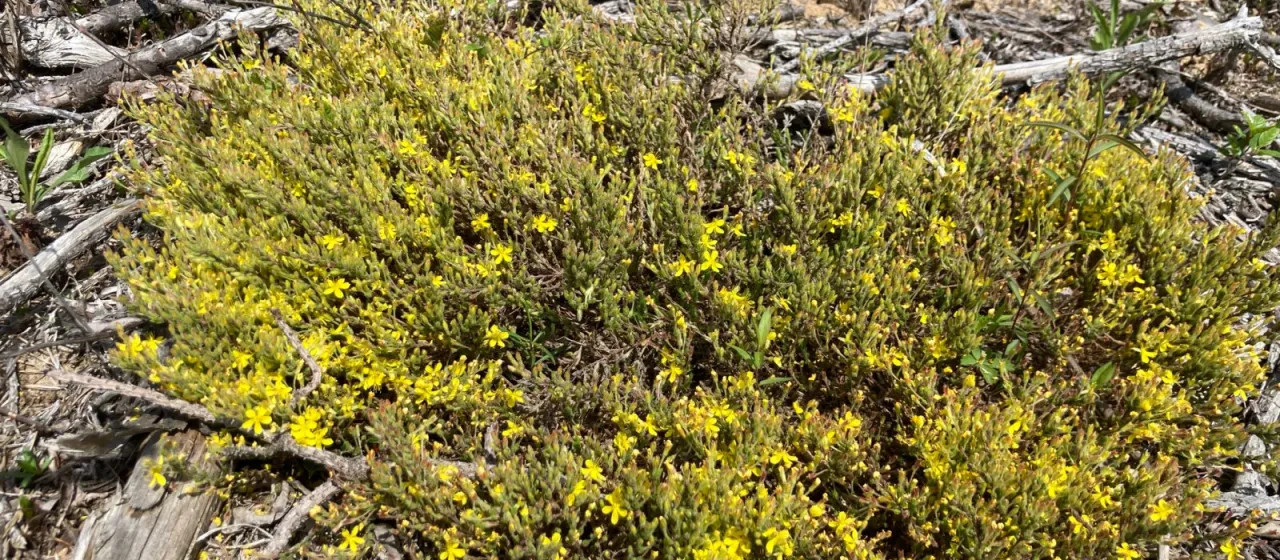
Botanically, Hudsonia ericoides forms dense, mat-like clusters, usually reaching heights between 15 and 30 centimeters. Its small, scale-like, evergreen leaves resemble those of true heather (Calluna), which minimizes transpiration. During the spring and early summer, the shrub produces an abundance of brilliant yellow, five-petaled flowers, which are capable of covering the entire foliage mass, creating a striking visual display.
Agricultural and horticultural management requires strict adherence to its ecological needs. The plant demands full sun exposure and a substrate that is acidic, sandy, and possesses perfect drainage. It is notoriously difficult to maintain in standard garden soil as it is sensitive to high nutrient levels and poor drainage, both of which can cause rapid root decay. Irrigation should be minimal, as the species is well-adapted to arid, drought-prone conditions.
- Requires full sun and excellent air circulation.
- Plant in well-draining, acidic, sandy media only.
- Avoid over-fertilization and high-phosphorus additives.
- Ensure the site is weed-free to prevent competition.
The primary use for this species is in xeriscaping and restoring disturbed sandy areas. It is generally resistant to most common garden pests and diseases when kept in its preferred, dry environment. However, gardeners must be vigilant regarding fungal pathogens if the plants are placed in areas with poor ventilation or high humidity, as these conditions are alien to its natural growth cycle.