
Description
Hudsonia tomentosa, commonly known as beach heather, is a low-growing perennial shrub belonging to the Cistaceae family. Despite its common name, it is not a true heather, yet it occupies similar ecological niches in sandy environments, characterized by extreme exposure and nutrient-poor soils.
The species is native to North America, widely distributed across the sandy regions of the Atlantic coast and the Great Lakes basin. Its natural habitat consists of open, sunny sites where it thrives in conditions of high wind and direct sunlight, often acting as a pioneer species in colonizing sand dunes.
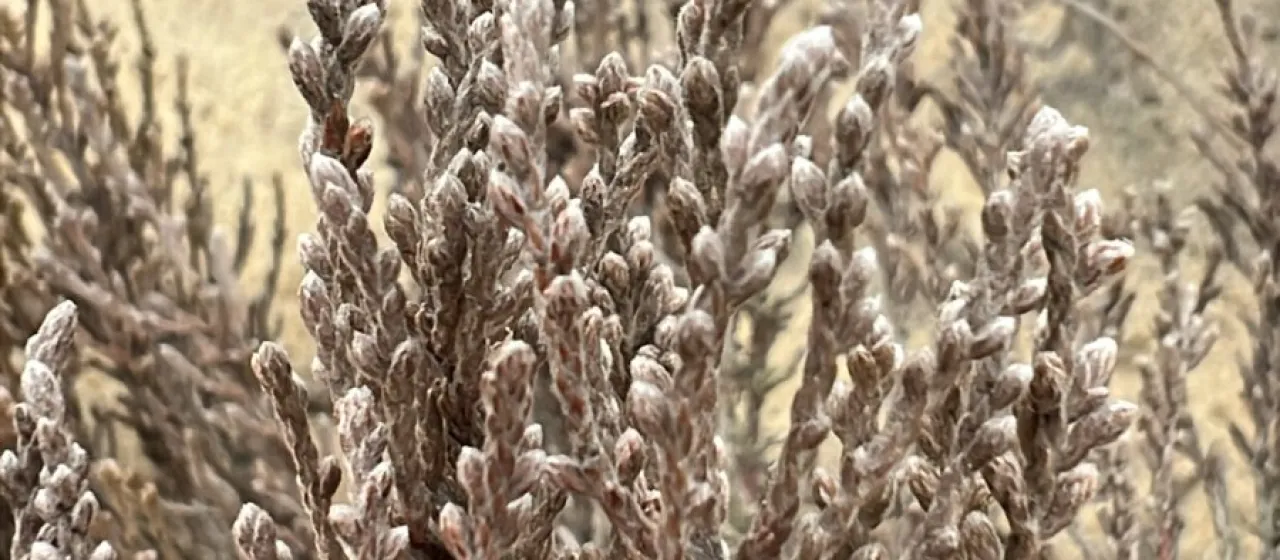
Botanically, it forms dense mats of branched stems covered with tiny, grey-green leaves. These leaves are densely covered with short, woolly hairs, which provides the plant with its specific silver-grey appearance and serves as an adaptation to reduce transpiration in arid, sun-scorched environments.
In terms of cultivation, the plant requires an environment that mimics its natural sandy habitat. Successful growth depends on full sun exposure and perfectly draining, acidic, and infertile soil. It is notoriously difficult to transplant and maintain in typical garden settings, as it is highly susceptible to root rot in heavier or enriched soils.
The primary economic and environmental value of Hudsonia tomentosa lies in dune stabilization and soil erosion control. Due to its dense growth habit and affinity for sand, it is a crucial component in preserving coastal integrity. It is also cultivated in specialized botanical collections for its unique aesthetic and hardiness.
- Highly drought-tolerant once established.
- Strict requirements for poor, acidic soil.
- Low tolerance for shade and competition.