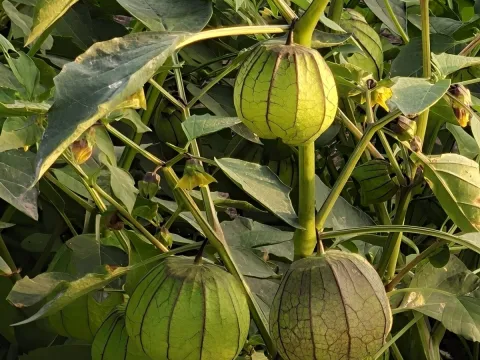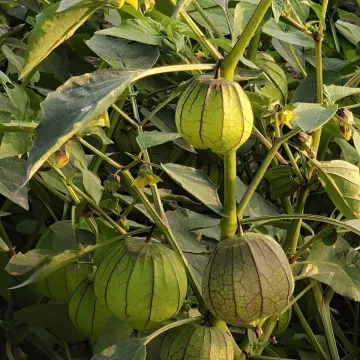
Physalis philadelphica
Physalis philadelphica Lam.
Description
Physalis philadelphica, commonly referred to as the tomatillo or Mexican husk tomato, is a prominent member of the Solanaceae (nightshade) family. This annual crop is highly valued for its unique culinary profile and robustness, making it a popular choice for both home gardeners and commercial farmers looking to diversify their vegetable production.
The species is native to Mexico and Central America, where it has been a staple crop since the pre-Columbian era. Today, its cultivation spans globally, having been successfully introduced to North America, Europe, and parts of Asia. Its ability to adapt to varying soil types has contributed to its widespread adoption as an important agricultural commodity.
Botanically, the plant grows as a branching bush that can reach heights of 1 to 1.5 meters. A distinctive feature is the fruit, which develops inside a papery, inflated calyx known as a husk. As the fruit matures, it fills the husk entirely. The berries themselves can range in color from light green to yellow, red, or even deep purple, often presenting a tangy, tart flavor profile.
Optimal growth for Physalis philadelphica requires full sun exposure and well-draining soil with a pH level between 6.0 and 7.0. It is a warm-season crop that is sensitive to frost; therefore, starting seeds indoors 4-6 weeks before the last frost date is standard practice. The plant is relatively drought-tolerant once established, but regular watering during the fruit-setting stage significantly improves yield.
The culinary versatility of the tomatillo is vast, making it a critical ingredient in modern food production:
- Foundation for authentic green salsas (salsa verde).
- Excellent addition to slow-cooked stews and chili dishes.
- Great for fresh salads or roasted as a side dish.
Managing the health of the plant involves monitoring for common pests like the Colorado potato beetle, aphids, and fruitworms. Diseases such as powdery mildew and bacterial wilt are also potential threats. Integrated Pest Management (IPM) strategies, including crop rotation and the use of resistant varieties, are essential to maintain a healthy and productive crop throughout the growing season.
Photo gallery