
Description
Frogbit (lat. Hydrocharis dubia) is a perennial aquatic plant belonging to the Hydrocharitaceae family. It is widely recognized for its floating growth habit and its role in maintaining water quality in various freshwater environments across the Asian continent.
The plant originates from East Asia, with a natural distribution range that includes the Russian Far East, China, Japan, and Korea. It typically thrives in stagnant or slow-moving freshwater bodies such as ponds, marshes, and ditches, where it forms dense, floating mats that cover the water surface.
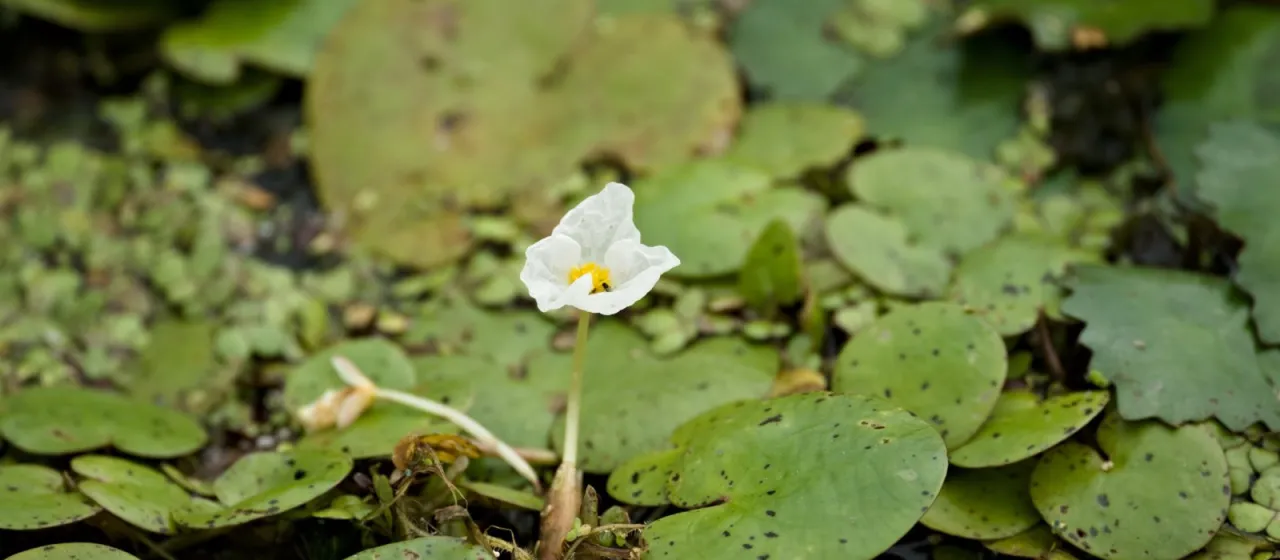
Botanically, Hydrocharis dubia is characterized by heart-shaped, fleshy leaves arranged in rosettes. Its root system is relatively shallow, designed to extract minerals directly from the water column. The plant produces delicate three-petaled white flowers that rise slightly above the surface, contributing to its aesthetic appeal.
For successful cultivation, the plant requires high light intensity and stable water temperatures ranging from 18°C to 25°C. It is a fast-growing species that spreads via stolons, meaning that in controlled environments, it requires regular thinning to prevent overcrowding. Proper water chemistry is essential, as the plant acts as a nutrient scavenger.
The agricultural and environmental use of frogbit includes:
- Use in ornamental ponds for landscaping.
- Biological control and purification of water in closed systems.
- Habitat enhancement for fish farming and breeding projects.
Common plant health issues include infestations by aquatic insects or snails that feed on the leaf tissue. Additionally, poor water circulation can lead to oxygen depletion, weakening the plant and making it susceptible to fungal growth. Regular water monitoring and removal of dead leaves are recommended to maintain a healthy population.