
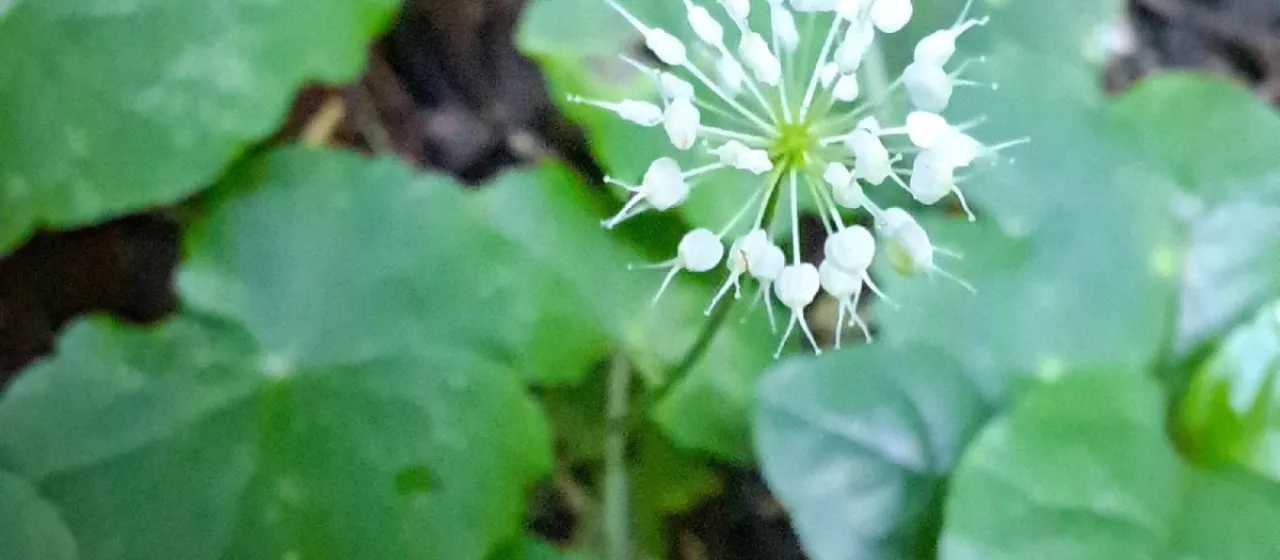
Description
Brazilian pennywort (Hydrocotyle leucocephala) is an herbaceous perennial plant belonging to the Araliaceae family. It is widely recognized in professional aquatic farming and aquascaping as a highly versatile plant capable of thriving in both fully submerged and emergent, water-logged conditions.
Originating from the tropical regions of Central and South America, specifically the Amazon basin, the species is native to riverbanks, swamps, and wetlands. Its natural environment provides a blueprint for its cultivation requirements, emphasizing the need for high moisture levels and consistent light availability to support vigorous development.
Botanically, the plant is characterized by a creeping, succulent stem that nodes at intervals, producing round, bright green leaves with distinct margins. The root system is relatively shallow but highly efficient at absorbing nutrients directly from the water column, which makes it an excellent plant for maintaining water quality.
Agrotechnical management requires precise environmental control. For optimal growth, water temperatures should be maintained between 20°C and 28°C with a neutral to slightly acidic pH range of 6.0 to 7.5. Whether in aquarium settings or hydroponic systems, the plant demands adequate lighting and supplemental nutrients to prevent nutrient deficiencies.
- Rapid growth rate requiring regular trimming.
- Easy propagation through stem cutting.
- High efficiency in nutrient uptake from water.
- Versatility in both terrestrial and aquatic settings.
Common issues in cultivation include iron deficiency, which manifests as yellowing leaves, and susceptibility to pests such as aphids when grown in emersed conditions. Proper maintenance involves regular pruning to ensure light penetration to the lower nodes and the consistent application of micronutrients to maintain foliage health and vigor.