
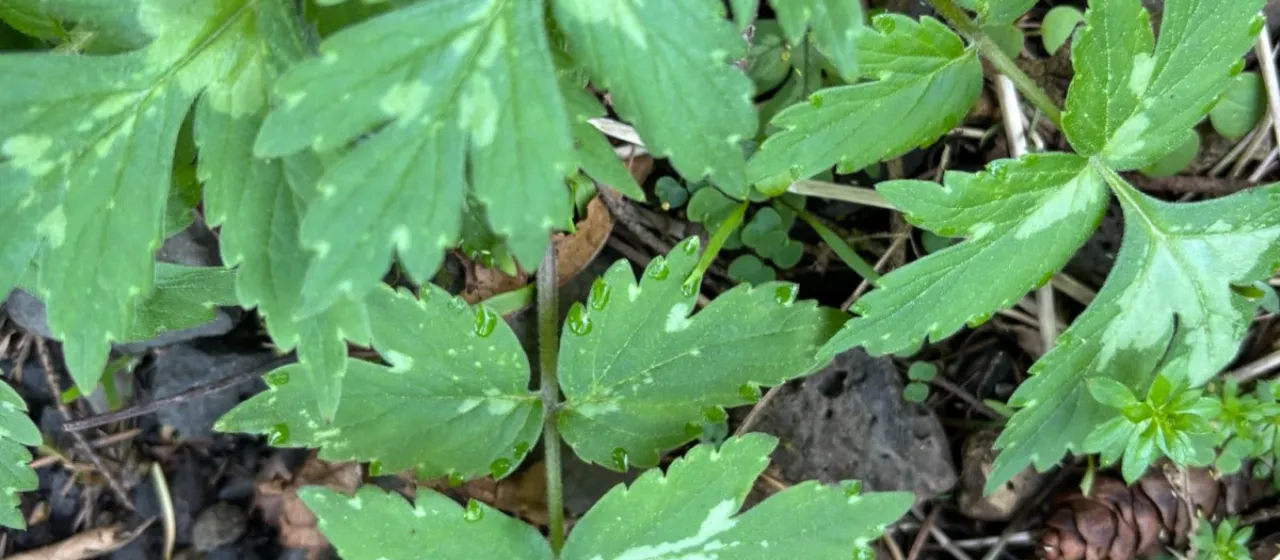
Description
Pacific waterleaf (Hydrophyllum tenuipes) is a perennial herbaceous plant belonging to the Boraginaceae family. While not a primary field crop, it is a highly valued species in woodland gardening and permaculture systems, prized for its ability to thrive in shaded environments where other vegetation often struggles.
Native to western North America, particularly the Pacific Northwest, this plant is commonly found in moist forests and riparian habitats. Its evolutionary history in shaded, humus-rich environments dictates its specific requirements for cultivation, focusing on microclimates that mimic temperate rainforest conditions.
Botanically, Hydrophyllum tenuipes is characterized by its palmately lobed leaves, which often display a mottled or spotted appearance in the spring. The flowers are typically white to pale violet and grow in terminal clusters on slender stems, which helps identify this species from other members of the waterleaf genus.
Regarding cultivation, the primary requirement is a cool, damp location with rich, organic, and well-draining soil. It is an excellent choice for shady farm borders or forest garden zones. Maintaining consistent soil moisture is crucial, especially during the early stages of establishment, to ensure robust foliage development.
- Climate: Prefers cool, moist temperate conditions.
- Propagation: Seeds or rhizome division in early spring.
- Disease Resistance: Generally robust, provided there is adequate air circulation.
In practice, Pacific waterleaf is primarily used as a groundcover that suppresses weeds and improves soil structure through organic matter accumulation. Its ecological value is high, as it serves as a nectar source for various native bees, contributing to the overall health and pollination success of the local farm ecosystem.