
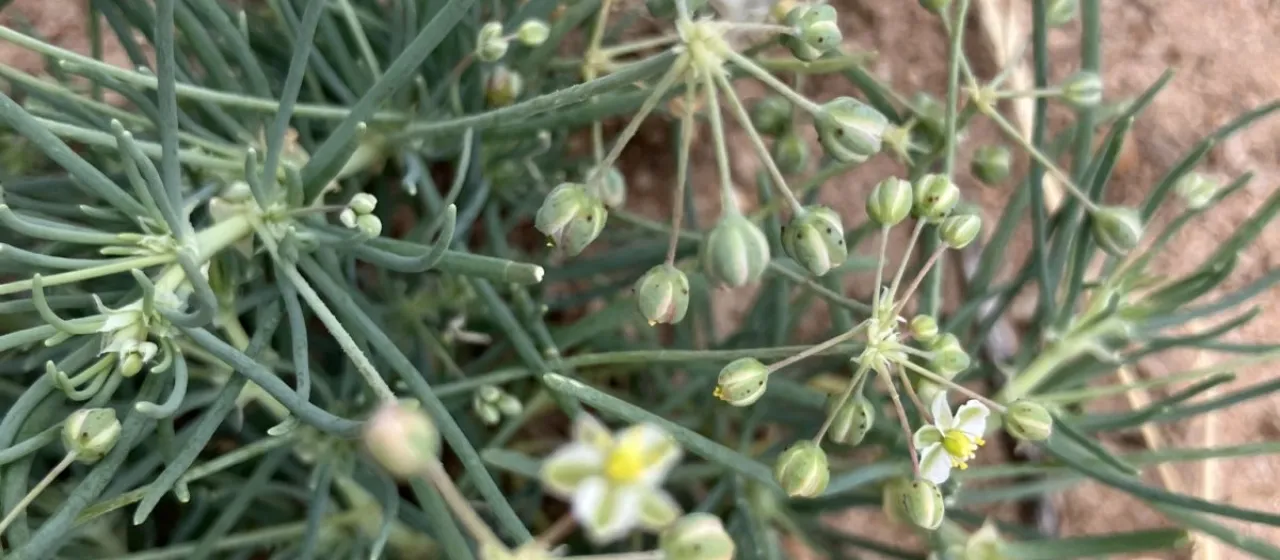
Description
Hypertelis bowkeriana is a unique botanical species belonging to the Molluginaceae family. While not a conventional staple crop, it is recognized by agronomists and botanists for its exceptional ability to thrive in harsh, arid environments. As a member of the succulent-like vegetation, it demonstrates specialized biological adaptations that are of interest for experimental agricultural studies in climate-stressed regions.
The plant originates from Southern Africa, particularly the regions of South Africa and Namibia. Its natural habitat consists of sandy, rocky plains where moisture is scarce and temperatures are frequently high. Hypertelis bowkeriana has evolved to inhabit these niches by developing extreme drought tolerance, allowing it to survive in areas where traditional crop production would be impossible without significant irrigation.
Botanically, this species is characterized by its succulent, fleshy leaves that store moisture, allowing the plant to maintain metabolic activity through extended dry periods. The root system is specifically adapted to penetrate coarse, nutrient-poor soil to find mineral traces. Its flowers are generally inconspicuous, typical of the family's growth habit, designed to maximize reproductive efficiency under resource-limited conditions.
Agronomic requirements for Hypertelis bowkeriana focus on well-drained, porous soils. In a managed environment, the culture demands high light intensity and minimal watering. The substrate should have excellent aeration; waterlogging is the primary risk to the plant's health and can lead to rapid physiological decline. Fertilization should be kept at a very low level to avoid over-concentration of salts in the growing medium.
- High exposure to solar radiation is required.
- Avoid heavy clay soils; favor sandy mixes.
- Strict control of irrigation cycles to prevent root rot.
- Protection from freezing temperatures is essential.
The current agricultural use of Hypertelis bowkeriana is mainly centered on landscape restoration in desertified zones and as a genetic model for drought resistance. While not susceptible to common field pests, in closed-environment cultivation, growers should be wary of mealybugs and root-pathogenic fungi caused by poor drainage. Ongoing research continues to explore its potential roles in dryland reclamation projects.