
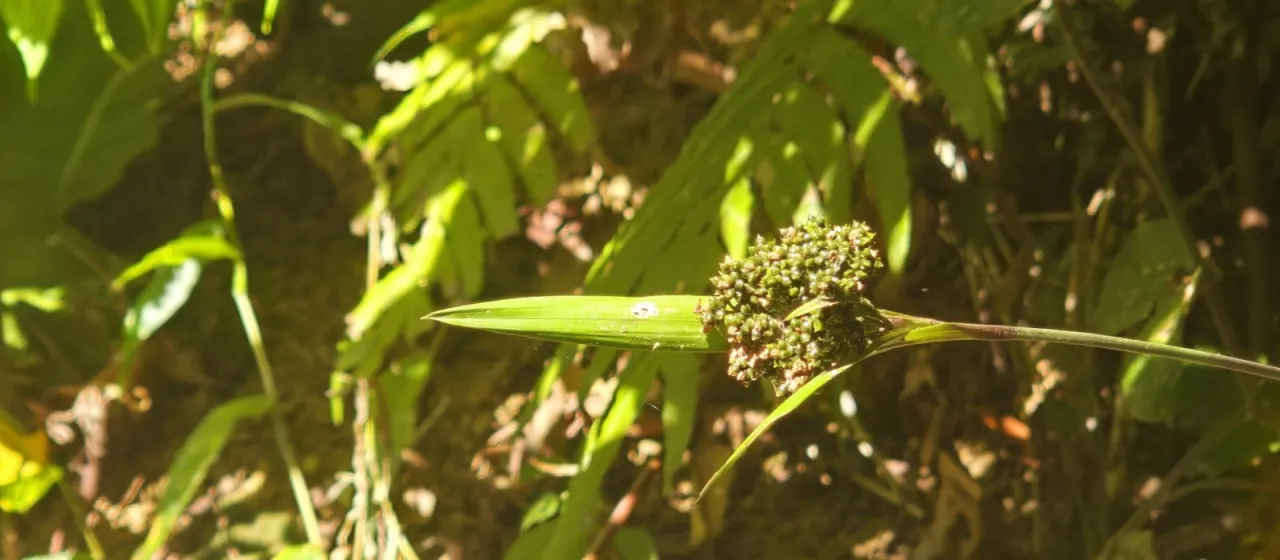
Description
Hypolytrum nemorum is a perennial herbaceous plant belonging to the Cyperaceae family. It is a distinct member of the tropical flora, known for its specific morphology and adaptation to humid forest environments. Within the family, it is recognized for its unique structural characteristics that differ from the typical sedge appearance.
The plant originates from Southeast Asia and the Pacific region, thriving in tropical rainforest understories. Its natural habitat is defined by constant high humidity, consistent temperatures, and low light intensity. Understanding this geographical origin is critical for successful cultivation in greenhouses or controlled environments.
Botanically, it is characterized by rhizomatous growth and tough, lanceolate leaves that grow in dense clumps. The inflorescences are complex structures composed of small spikes, typically arranged in a branched or clustered pattern. The plant exhibits a slow to moderate growth rate, maintaining a dense habit throughout the year if provided with adequate moisture.
Cultivation requirements for this species focus primarily on humidity and soil moisture. It requires a well-draining, moisture-retentive substrate rich in organic matter. Avoidance of direct sunlight is essential, as the foliage is prone to dehydration under intense light. A stable, warm climate is necessary to prevent physiological stress.
- Maintenance of ambient humidity levels at or above 70%.
- Consistent irrigation with filtered or distilled water.
- Use of a rich, slightly acidic soil mixture with leaf mold.
- Regular inspection for pests such as scale insects or spider mites.
- Avoidance of fertilizer concentration that might cause root burn.
Regarding its use, Hypolytrum nemorum serves mainly as a decorative plant in specialized settings like botanical gardens or indoor conservatory displays. It is valued for its lush, architectural foliage, which adds texture to shaded planting schemes. Beyond aesthetics, it is also studied for its role in tropical forest soil stabilization and moisture retention.