
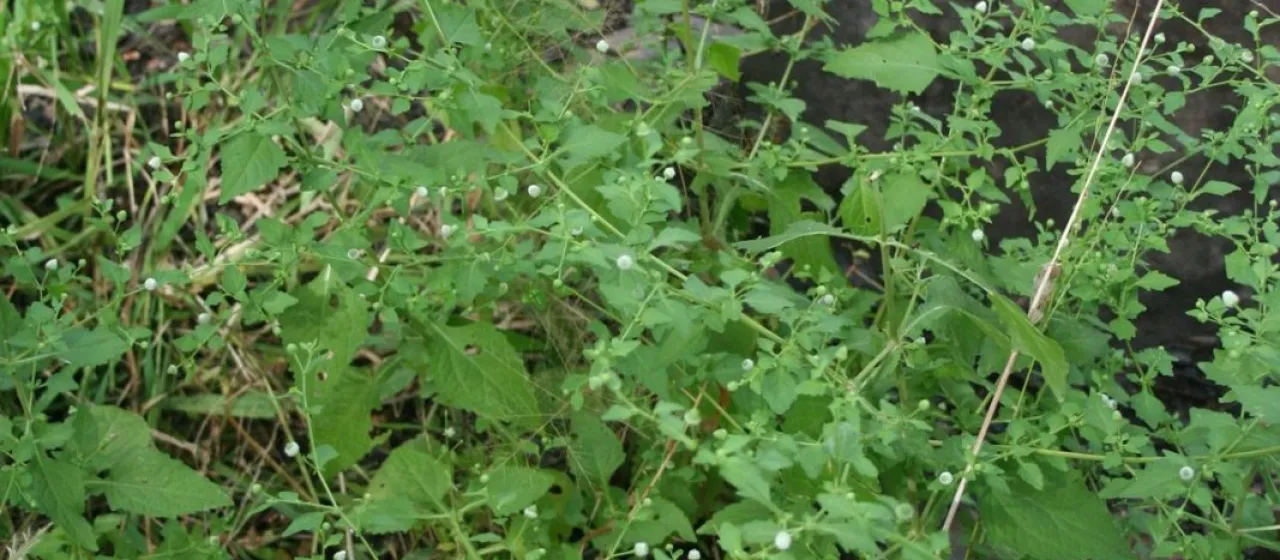
Description
Isocarpha atriplicifolia is a perennial herbaceous plant belonging to the Asteraceae family. Known for its distinct morphological traits and chemical composition, this species serves as a subject of study in both botanical research and specific agricultural niche applications within tropical climates.
The plant originates from Central and South America, as well as the Caribbean islands. Its natural habitat consists of open, sun-drenched areas with well-drained soils. Due to its tropical origins, the plant does not tolerate frost, which limits its commercial cultivation to frost-free zones or controlled greenhouse environments.
Botanically, it features upright, branched stems and leaves that resemble those of the genus Atriplex, giving it its specific epithet. The inflorescences are dense, composite heads characteristic of the Aster family. The plant possesses a robust root system, enabling it to stabilize itself in various soil types and survive periods of moderate moisture stress.
Agronomic success with Isocarpha atriplicifolia requires fertile, well-drained soil with a slightly acidic to neutral pH. High light intensity is crucial; therefore, field placement must avoid shaded areas. Irrigation should be managed to ensure soil moisture consistency without causing waterlogging, which is detrimental to root health.
Economic use primarily involves the extraction of bioactive compounds used in traditional and modern medicinal preparations. Maintaining a healthy crop involves monitoring for common threats such as aphids and spider mites. In high-humidity environments, preventing fungal diseases, particularly root rots and foliar mildews, remains the primary focus of the pest management strategy.