
Description
Isocoma menziesii, commonly referred to as Menzies' goldenbush, is a perennial subshrub belonging to the Asteraceae family. Known for its hardiness and vibrant appearance, this plant thrives in challenging environments where many other species struggle to establish themselves, making it a subject of interest for ecological restoration.
The plant is native to the southwestern region of North America, particularly throughout California and Baja California. It is primarily found in coastal sage scrub, chaparral, and various semi-arid landscapes. Its geographical range confirms its high tolerance to oceanic influences, heat, and seasonal moisture deficits characteristic of Mediterranean-like climates.
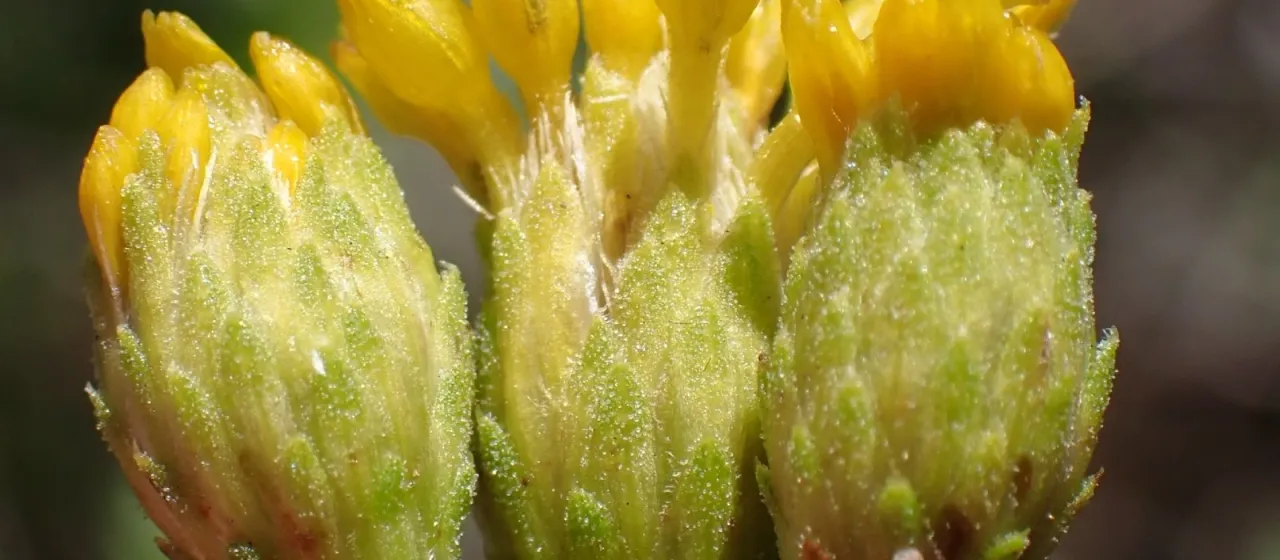
Botanically, Isocoma menziesii features woody stems at the base with resinous, linear to lanceolate leaves. It produces terminal clusters of golden-yellow flower heads during its flowering season, which usually extends from late spring through autumn. Its deep taproot system is an evolutionary adaptation that ensures survival during prolonged dry spells common in its natural habitat.
Regarding agrotechnical requirements, the species performs optimally in full sun exposure and well-draining, gritty, or sandy soils. It is remarkably resilient to poor soil quality and high salinity, often found in coastal regions. Growers should avoid excessive irrigation, as the plant is highly susceptible to root rot in saturated, poorly aerated soil conditions.
Economically and ecologically, this species is valuable for erosion control and xeriscaping projects. Because it is highly adapted to local arid conditions, it requires minimal maintenance. Furthermore, its flowers serve as a critical late-season nectar source for various native bees, butterflies, and other essential pollinators, providing ecological support to the surrounding flora and fauna.
- Excellent drought and heat tolerance.
- High adaptability to poor and saline soil conditions.
- Low maintenance and water requirement.
- Significant ecological value as a pollinator habitat.