Jackfruit
Artocarpus heterophyllus Lam.
Description
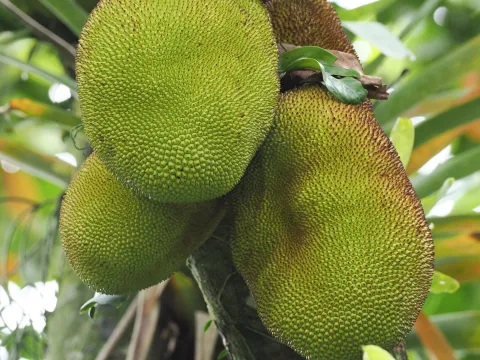
Jackfruit (lat. Artocarpus heterophyllus Lam.) is a tropical evergreen tree belonging to the Moraceae family. It is recognized as the largest tree-borne fruit in the world, capable of producing fruits weighing up to 40 kilograms.
Native to the rainforests of South and Southeast Asia, specifically India and Bangladesh, the jackfruit is now a vital agricultural crop across the tropics. It thrives in humid low-altitude regions where temperatures remain high throughout the year, as the plant is highly sensitive to frost.
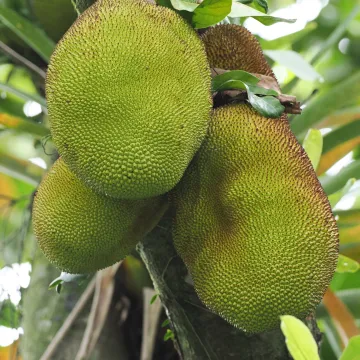
Botanically, the tree exhibits a unique trait called cauliflory, where fruits grow directly on the main trunk and large branches rather than on new stems. The tree can reach heights of 20 meters, possessing glossy, leathery leaves and a dense canopy that provides significant shade in agroforestry systems.
Agronomic requirements for jackfruit include deep, nutrient-rich, and well-drained soils. The plant is drought-intolerant and requires consistent moisture, especially during the fruit-set phase. While it can adapt to various soil types, waterlogged conditions must be strictly avoided to prevent root rot.
Commercial utilization of jackfruit is versatile: the fruit is used both as a staple vegetable when green and as a sweet fruit when ripe. The seeds are also a source of starch. Common pests include the jackfruit borer and fruit flies, which require integrated pest management strategies to ensure high yields and quality.
Photo gallery