Chempedak
Artocarpus integer (Thunb.) Merr.
Description
Chempedak (Artocarpus integer) is an evergreen tropical fruit tree belonging to the Moraceae family. A close relative of the jackfruit and the breadfruit, it is highly valued for its aromatic, sweet, and flavorful fruits, which play a significant role in the local food security of Southeast Asian nations.
Native to the Malay Peninsula and the Indonesian archipelago, this crop is currently cultivated extensively throughout Southeast Asia, particularly in Indonesia, Malaysia, Thailand, and Vietnam. The tree thrives in hot, humid tropical climates and is highly sensitive to temperatures dropping below freezing point.
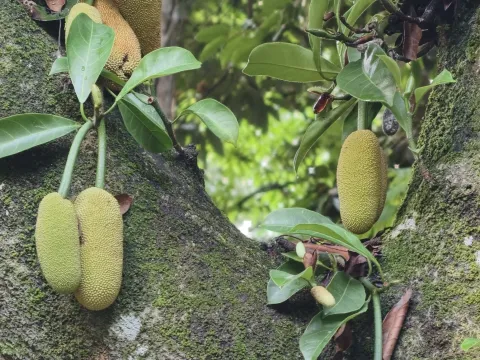
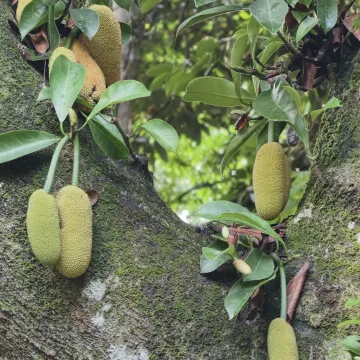
Botanically, the tree can reach heights of up to 20 meters, featuring a dense canopy and leathery leaves. The fruits grow directly on the trunk and main branches (cauliflory). A mature fruit is typically cylindrical or elongated, protected by a dense, bumpy rind that turns from green to brownish-yellow as it reaches peak maturity.
Successful cultivation of Chempedak requires deep, fertile, and well-drained soils rich in organic matter, with an ideal pH range of 5.5 to 6.5. The tree demands consistent moisture and cannot withstand prolonged droughts, making irrigation essential during drier seasons to maintain fruit set and development.
- Propagated via seeds or vegetative grafting.
- Harvested at the stage of physiological maturity.
- Regular pruning for crown management.
- Mulching to retain soil moisture.
- Pest control targeting boring insects.
Chempedak is primarily consumed fresh, known for its intense aroma and sweet, custard-like pulp. Beyond fresh consumption, the fruit is often battered and deep-fried, incorporated into desserts, cakes, or processed into jams. The seeds are also considered a delicacy when boiled or roasted, resembling the taste and texture of chestnuts.
The crop is susceptible to several pathogens, including root rot caused by Phytophthora species and leaf anthracnose. Common insect pests include stem-boring larvae that damage the trunk integrity, as well as aphids and mealybugs that congregate on tender shoots and fruitlets, often requiring integrated pest management.
Photo gallery