
Description
Kaikawaka (Latin: Libocedrus bidwillii) is a slow-growing evergreen conifer belonging to the Cupressaceae family. Native to New Zealand, this species is highly valued for its elegant foliage and distinct conical shape. In its natural mountain habitat, it can reach heights of up to 20 meters, although it remains significantly smaller in managed landscape settings.
The species originates from the high-altitude forests of New Zealand's North and South Islands. It thrives in cool, temperate, and subalpine climates where humidity levels are consistently high. Unlike many other conifers, it does not adapt well to hot, dry climates, making its cultivation restricted to specific geographical zones that mimic its native moist environment.
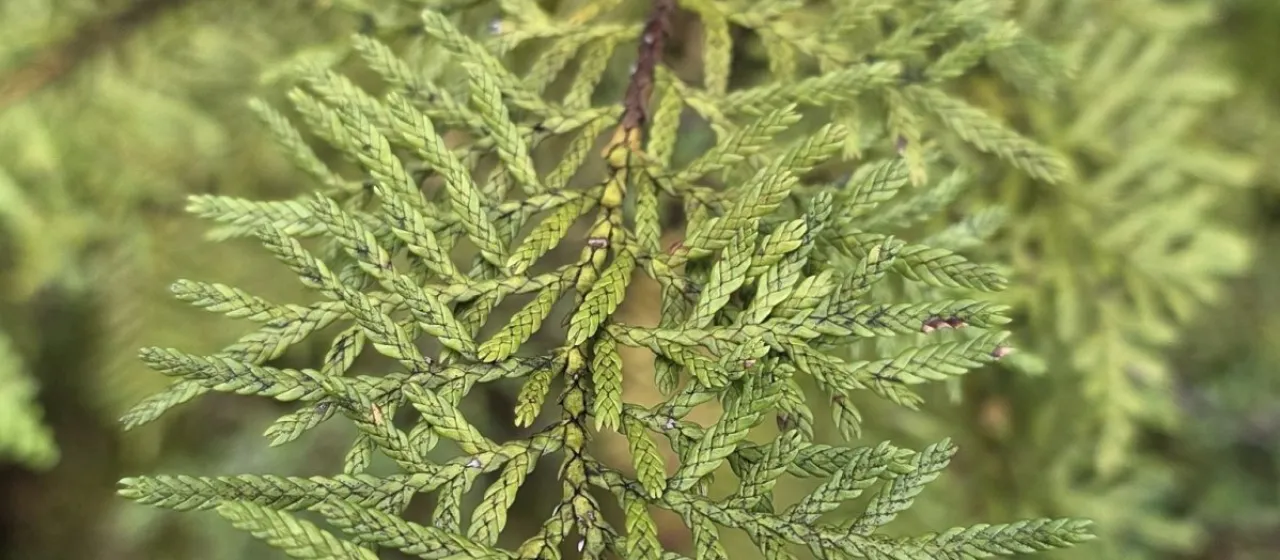
Botanically, Kaikawaka is characterized by its scale-like leaves arranged in four ranks, creating a flattened, fan-like branch appearance. The bark is reddish-brown and exfoliates in thin strips as the tree matures. It produces small, woody seed cones that are essential for its natural propagation, releasing winged seeds typically during the autumn months.
Cultivation requires careful attention to soil conditions; the tree demands deep, well-draining, slightly acidic soil rich in organic matter. A key agricultural rule for this species is to avoid waterlogged sites, as root rot is a common issue in poorly aerated soils. It performs best in partial shade, where it is shielded from the harsh intensity of midday sun.
Economically, Kaikawaka is primarily utilized in specialized ornamental horticulture and botanical collections. While its wood is historically known for durability and resistance to decay, current conservation status limits its commercial logging. Pathogens such as Phytophthora species pose a threat if drainage is inadequate, while pests like aphids or scale insects may occasionally infest plants stressed by poor environmental conditions.