Kalanchoe crenata
Kalanchoe crenata (Andrews) Haw.
Description
Kalanchoe crenata (Andrews) Haw. is a succulent herbaceous perennial belonging to the Crassulaceae family. It is a hardy, drought-tolerant species that serves as both an ornamental and a source of active botanical compounds, making it a valuable subject for specialized crop cultivation in arid environments.
The plant originates from tropical Africa and the Arabian Peninsula. Its natural habitat consists of rocky terrain and nutrient-poor soils where it thrives under high light intensity. Due to its evolutionary background, it is exceptionally efficient in water usage, utilizing Crassulacean acid metabolism (CAM) to survive in harsh agricultural conditions.
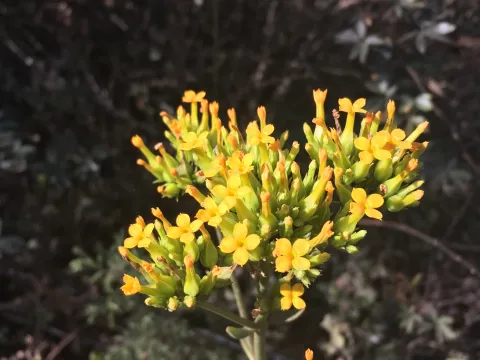
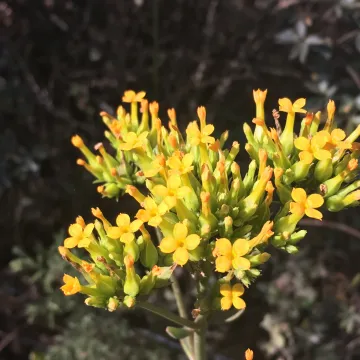
Botanically, it is characterized by its erect, fleshy stems and notched leaves, which provide the diagnostic feature of the species. The inflorescences are terminal and bloom with vibrant yellow-to-orange flowers. The plant exhibits rapid growth under optimal conditions, reaching significant height if adequately pruned and managed during the vegetative stage.
Agronomic requirements for successful cultivation include well-draining, sandy or loamy soils with a near-neutral pH. High humidity is detrimental to this crop; therefore, it requires a dry climate or controlled greenhouse environments. Propagation is typically achieved via stem cuttings or leaf cuttings, allowing for uniform crop development across large production areas.
Host plant utilization is broad, primarily focusing on the pharmaceutical industry, where its leaf extracts are used for wound healing. Typical pests include mealybugs and aphids, while root rot remains the most common physiological disorder caused by overwatering. Successful production relies on strict moisture control and appropriate spacing to prevent fungal outbreaks.
- Ensure well-drained substrate.
- Maintain high light exposure.
- Apply balanced mineral fertilizers during the active growth period.
Photo gallery