
Description
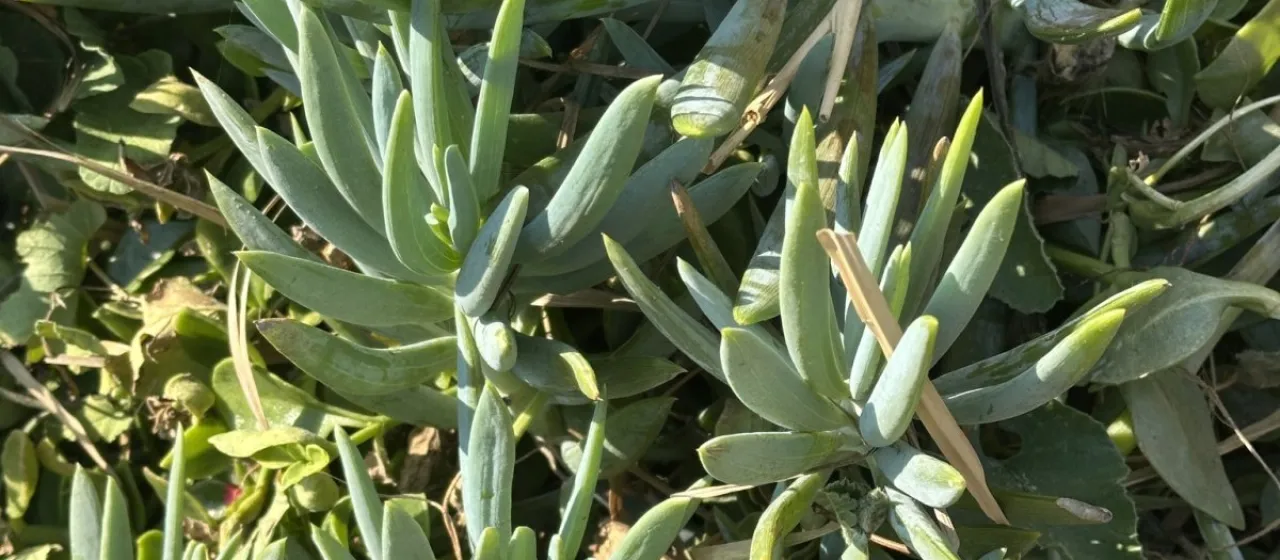
Kleinia repens, commonly known as blue chalk sticks, is a succulent plant species within the Asteraceae family. Historically classified under the genus Senecio, this plant is widely cultivated in modern landscaping and nurseries for its distinctive glaucous-blue foliage and its utility as a drought-tolerant ground cover.
The species is native to South Africa, specifically flourishing in rocky and arid coastal regions. Its evolutionary history in these habitats has resulted in high tolerance to poor soil quality and significant resistance to extended dry periods, making it a staple crop in low-maintenance xeriscaping projects.
Botanically, the plant is characterized by its cylindrical, finger-like leaves that are densely arranged on low-spreading stems. These succulent leaves contain water-storing tissues, and their characteristic blue hue is a result of a waxy cuticle layer that serves as a protective barrier against intense solar radiation and excessive transpiration.
From an agrotechnical perspective, Kleinia repens requires well-draining soil with a coarse structure to prevent root suffocation. The plant thrives in full sun, which is essential to maintain its compact growth habit and vibrant coloration. Fertilization should be kept to a minimum to avoid promoting weak, succulent growth that is more susceptible to environmental stress.
Maintaining the health of Kleinia repens involves monitoring for specific biological threats:
- Mealybugs, which tend to congregate in leaf axils.
- Root rot pathogens, primarily triggered by overly saturated soil conditions.
- Stem rot, often exacerbated by poor air circulation in humid greenhouses.