
Description
Kleinia talinoides is a succulent perennial plant belonging to the Asteraceae family. Historically linked to the Senecio genus, it is now taxonomically placed within the Kleinia genus. This plant is recognized for its structural foliage and high adaptation to arid environments, making it a distinct subject in specialized horticulture.
Native to Southern Africa, this species originates from rocky and dry habitats where it thrives on rocky outcrops. Its natural range encompasses regions characterized by intense sunlight and low rainfall. In a horticultural context, it is cultivated worldwide, primarily in greenhouses and outdoor settings within mediterranean-like climates where frost is non-existent.
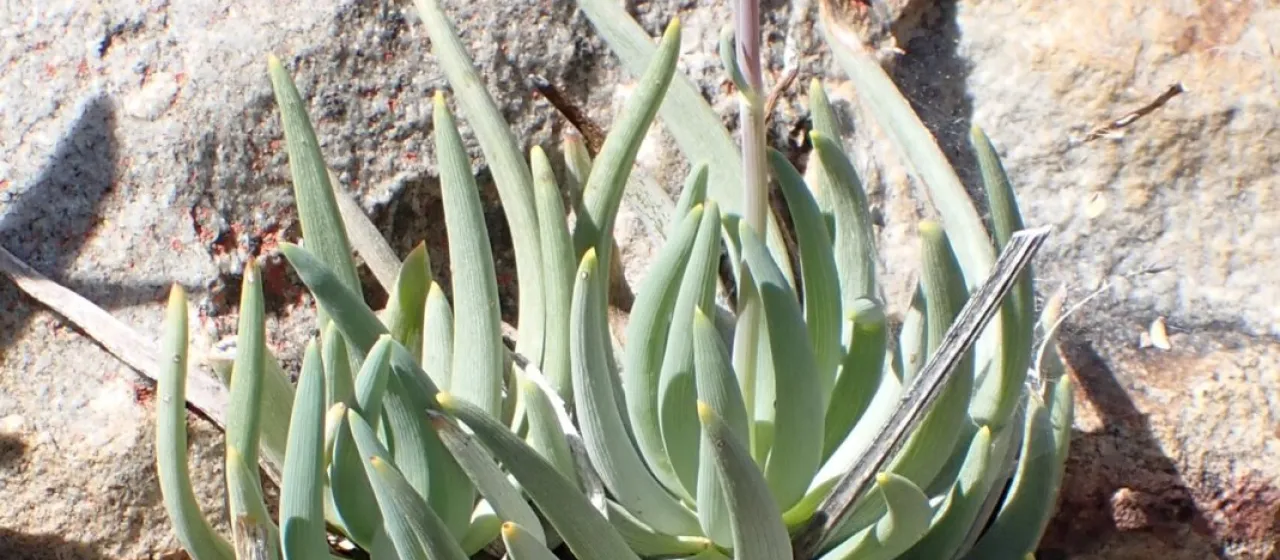
Botanically, the plant features fleshy, cylindrical leaves that often display a glaucous or bluish hue due to a protective wax layer. This epicuticular wax is an essential evolutionary trait to minimize transpiration. Its growth habit is that of a compact shrub, which can reach moderate heights depending on the specific light conditions and substrate quality.
From an agrotechnical perspective, Kleinia talinoides requires a mineral-based substrate with excellent drainage properties to prevent root rot. It demands high light intensity; partial shade results in etiolation and loss of the characteristic compact form. Irrigation must follow a 'soak and dry' method, ensuring the substrate is completely dry before subsequent watering to replicate natural environmental cycles.
The primary use of this crop is in the ornamental horticulture industry, particularly for xeriscaping and drought-tolerant garden design. While it is generally robust, it is susceptible to specific pathogens. Common issues include soil-borne fungal pathogens causing rot, as well as sap-sucking insects like mealybugs that thrive in the crevices of the foliage. Routine monitoring is essential for maintaining plant health.