
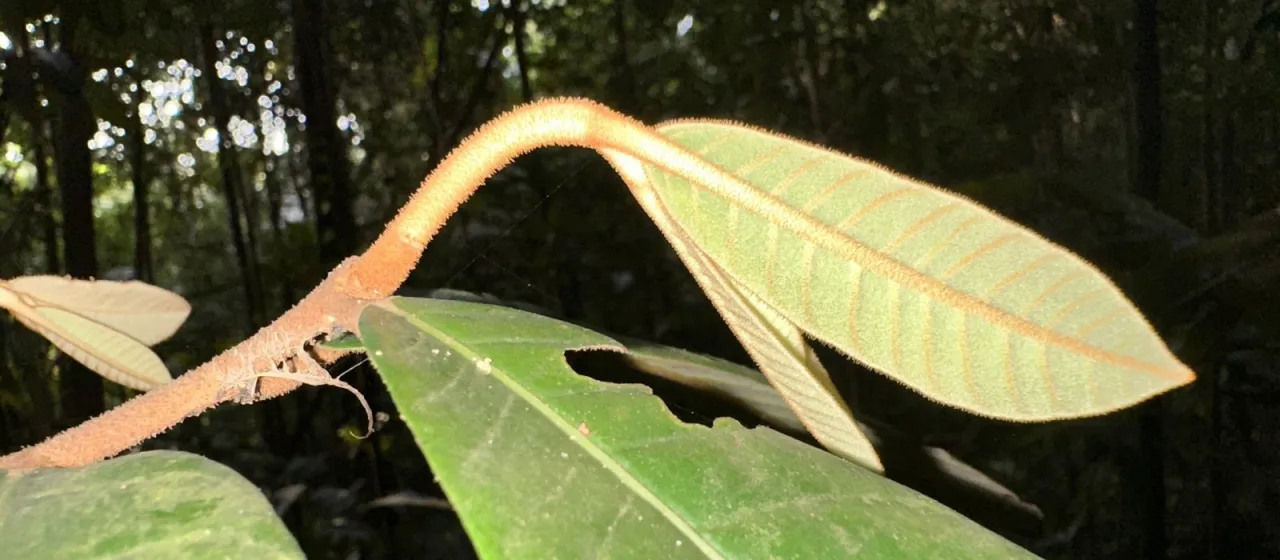
Description
Knema laurina is a perennial evergreen tree belonging to the Myristicaceae family. Often overlooked in favor of its more famous cousin, the nutmeg tree (Myristica fragrans), this species is a significant component of tropical rainforest ecosystems in Southeast Asia, valued primarily for its ecological role and timber properties.
The native range of Knema laurina spans across Malaysia, Indonesia, and various parts of the Philippines. These trees thrive in lowland dipterocarp forests where high humidity and consistent rainfall are the norm. They occupy the understory and middle layers of the canopy, showcasing a remarkable adaptation to low-light conditions found beneath dense foliage.
Botanically, the tree is characterized by its coriaceous, lanceolate leaves that give the plant its specific epithet laurina, resembling laurel leaves. The bark is typically smooth to slightly fissured, and the tree produces small, capsular fruits that split open to expose seeds coated with a thin aril. Its wood is moderately heavy and durable, making it a subject of interest in local timber management.
Cultivation requirements involve high-altitude tropical environments with temperatures ranging between 22°C and 30°C. Knema laurina requires fertile, deep, and well-drained soils to prevent root rot, which is a common issue in waterlogged environments. Silvicultural practices focus on maintaining canopy cover during the juvenile stages to ensure healthy development and straight bole formation.
Economic utilization revolves around sustainable logging practices, as the wood is suitable for light furniture and interior paneling. Furthermore, the species is currently being studied for potential phytotherapeutic compounds found in its bark and leaves. Typical pests include tropical borers that target the sapwood, while fungal diseases can be mitigated through proper spacing and maintaining adequate air circulation within the plantation.