
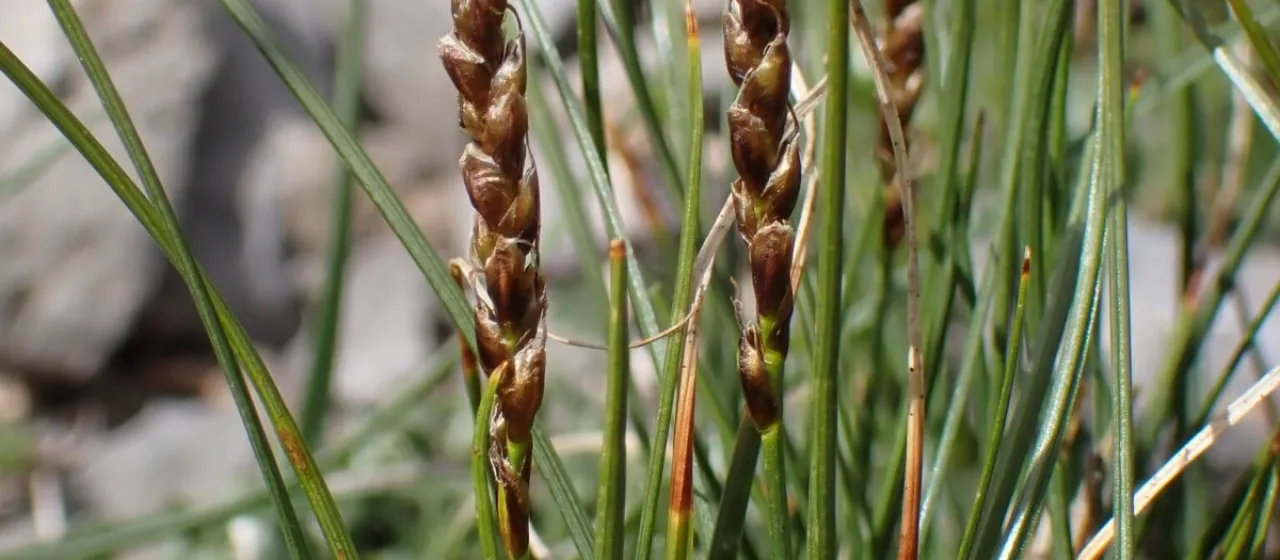
Description
Kobresia myosuroides is a perennial herb belonging to the Cyperaceae family. It is a dominant species in many alpine and arctic ecosystems, recognized for its ability to form dense swards that survive in the harshest environments where more sensitive plants fail to thrive.
The geographic distribution of this species is extensive, covering circumpolar regions of the Northern Hemisphere, including the Rocky Mountains, the Himalayas, the Alps, and arctic regions of North America and Eurasia. It typically grows in well-drained, nutrient-poor alpine tundra and meadow habitats.
Botanically, it is characterized by narrow, needle-like leaves and cylindrical, spike-like inflorescences that resemble a mouse tail, which justifies its specific epithet. It develops a dense root system, allowing the plant to stabilize loose soil on steep mountain slopes and withstand strong winds and freezing temperatures.
In terms of cultivation requirements, it prefers rocky, well-drained substrates with neutral to slightly acidic pH levels. It requires high light intensity and is intolerant of sustained waterlogging. Managing such pastures requires caution to prevent overgrazing, as the growth rate of this species is relatively slow due to the short high-altitude growing season.
Economically, it serves as a critical forage resource for mountain livestock such as sheep, goats, and yaks. It provides essential grazing during the summer months when other vegetation is scarce. Beyond agriculture, it is essential for soil conservation in alpine regions, acting as a buffer against erosion and preserving the structural integrity of mountain landscapes.
- Highly cold-tolerant perennial forage species.
- Excellent ground cover for erosion control.
- Adapted to extreme alpine and arctic climates.
- Nutritious forage for mountain-dwelling livestock.
- Significant ecological importance for biodiversity.