
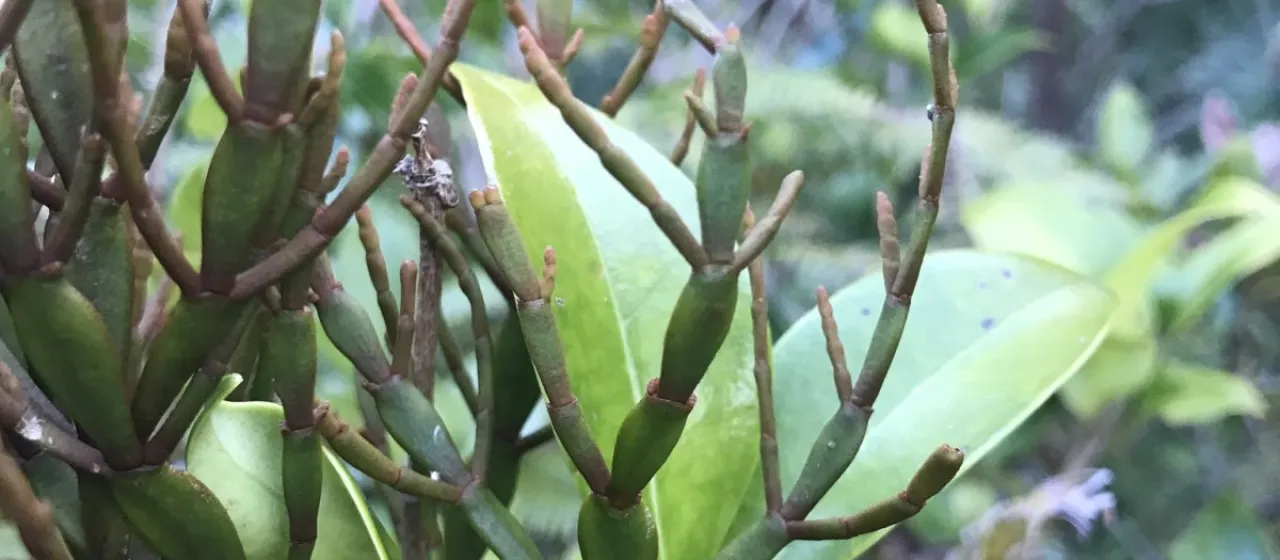
Description
Korthalsella japonica is a distinct species belonging to the family Santalaceae. It is not a commercial agricultural crop but rather a specialized epiphytic parasitic plant. Known for its unique adaptation to its environment, this plant grows directly on the branches of woody hosts, relying on them for water and mineral nutrients while maintaining its own photosynthetic capabilities.
The native range of this species extends across East and Southeast Asia, including countries like Japan, China, and Korea. It thrives in humid forest ecosystems, preferring tree species that provide a stable environment for its haustoria to penetrate. Because it is an epiphyte, it does not require soil for growth, which is one of the most fascinating aspects of its survival strategy.
Botanically, Korthalsella japonica is characterized by its articulated, leafless stems. The plant body is composed of small, flattened or cylindrical segments that perform photosynthesis. This structural modification is an evolutionary response to living in the canopy, where it must maximize light absorption while minimizing water loss in a precarious position on tree branches.
In terms of хозяйственное использование (economic use), the plant is occasionally utilized in traditional herbal medicine within its native range. While it is not farmed in large-scale agriculture, it is of significant interest to botanical science and ethnopharmacology. The plant's reliance on specific host species makes it a bioindicator of forest health, and its cultivation remains limited to experimental or conservation settings.
Typical challenges for this species include the loss of forest habitats and the decline of host trees. It is susceptible to various fungal infections that attack the connection point between the parasite and the host. Furthermore, specialized herbivores and insects may feed on the succulent stems, which serve as the plant's primary photosynthetic organs. Protecting the ecosystem as a whole is critical for the survival of this rare species.
- Family: Santalaceae
- Growth Habit: Epiphytic parasite
- Region: East and Southeast Asia
- Key Feature: Leafless, jointed stems
- Ecological Status: Often found in mature forests