
Description
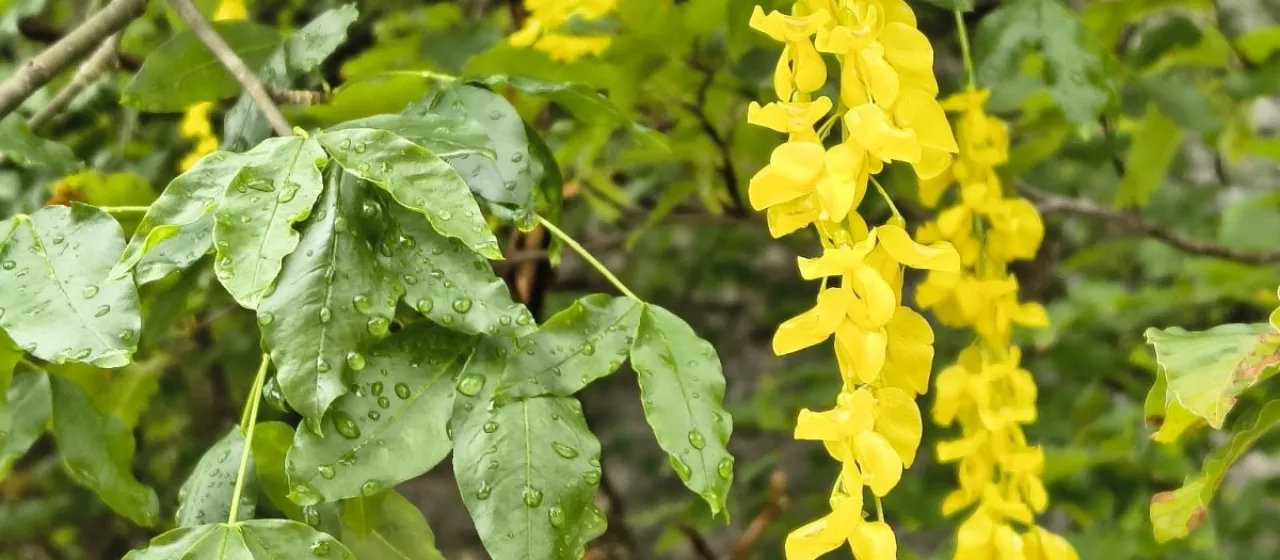
Alpine laburnum (Laburnum alpinum) is a deciduous shrub or small tree belonging to the Fabaceae family. Renowned for its spectacular display of pendulous racemes of yellow, pea-like flowers, it is commonly known in gardening circles as the "golden chain tree." It serves as a striking focal point in various landscaping projects.
Native to the mountainous regions of Central and Southern Europe, this species has been introduced to many temperate regions globally. It thrives in climates that offer clear, sunny conditions and well-drained soil, making it a popular choice for gardens located in mountainous or hilly terrains where other species might struggle.
Botanically, the plant features trifoliate leaves and can reach a height of up to 6 meters. Its defining characteristic is the long, drooping flower clusters that appear in late spring and early summer. It is crucial to note that all parts of the plant are toxic due to the presence of cytisine alkaloids, requiring careful placement away from livestock or areas accessible to young children.
Essential cultivation practices for Alpine laburnum include:
- Soil: Prefers deep, fertile, and well-draining soils with a tendency toward alkalinity.
- Site: Thrives in full sun to partial shade, sheltered from harsh, drying winds.
- Pruning: Light pruning is recommended after flowering to maintain shape and remove deadwood.
- Fertilizing: A light application of balanced fertilizer in early spring supports healthy growth.
The primary utility of the Alpine laburnum is ornamental. It is widely used in park planning and private gardening as an ornamental specimen, often planted near structures or fences to highlight its cascading habit. Because of its toxicity, it holds no value as forage or food, though its wood is occasionally prized by woodworkers for its density and fine grain.
Regarding health management, the plant is susceptible to common garden issues such as powdery mildew, especially in humid environments with poor air circulation. Pests like aphids and scale insects can also infest the canopy. Maintaining plant vigor through proper site selection and occasional biological pest control is usually sufficient to manage these risks effectively.