
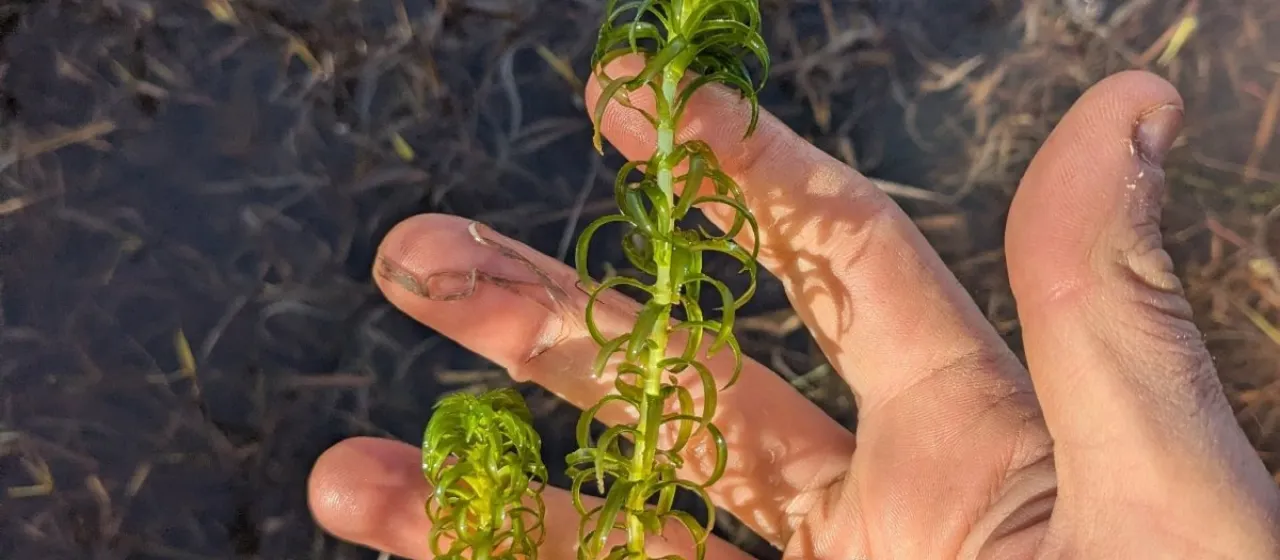
Description
Lagarosiphon major, commonly known as curly waterweed or African elodea, is a perennial submerged aquatic plant belonging to the Hydrocharitaceae family. It is recognized for its dense, spirally arranged leaves and long, robust stems that can form impenetrable mats in shallow freshwater bodies.
The plant originates from Southern Africa. Due to its popularity in the international aquarium trade, it has been introduced to various parts of the world, including Europe, New Zealand, and North America. In these regions, it often escapes cultivation, becoming a significant invasive threat to local freshwater ecosystems.
Botanically, this species is characterized by high rates of vegetative propagation. It lacks true roots and relies on rhizoids for attachment to the substrate. Each small fragment of the stem is capable of growing into a full-sized plant, which makes it exceptionally difficult to eradicate once it has established in a lake or river system.
In terms of agricultural and environmental requirements, the plant thrives in static or slow-moving waters. It prefers full to partial sunlight and temperature ranges between 15°C and 25°C. The species is highly nutrient-efficient, utilizing nitrogen and phosphorus directly from the water column, which allows it to outcompete native aquatic flora.
The primary use for this species is in the aquarium and ornamental pond industry for its decorative value and oxygenating properties. However, its management is crucial: in natural ecosystems, mechanical harvesting or specific chemical treatments are often required to control its spread. Being a robust species, it is rarely affected by pests or diseases, which further contributes to its invasive success.