
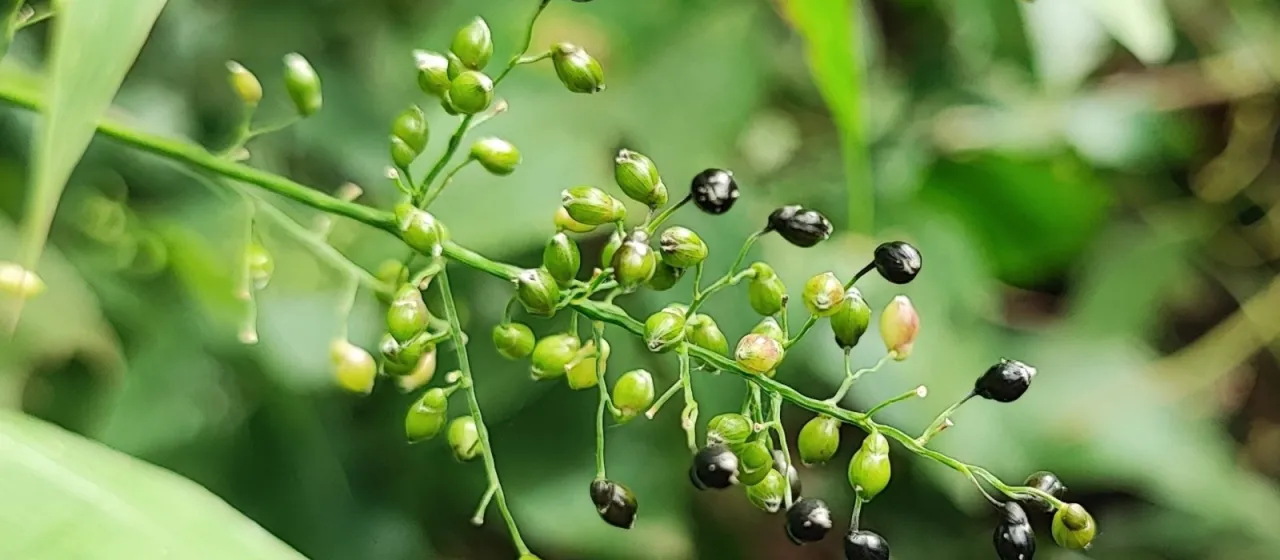
Description
Lasiacis ligulata is a perennial herbaceous plant belonging to the Poaceae family. Often referred to as a tropical grass, it is distinguished by its semi-woody stems that give the plant a bamboo-like appearance. It serves as an important component of the tropical undergrowth and thrives in regions where constant moisture and high temperatures are present year-round.
The native range of this species covers tropical areas of the Americas, including Central America, the Caribbean, and parts of South America. It typically grows in forested areas, edges, and clearings. The plant has evolved to adapt to diverse light conditions, ranging from shaded understory environments to more exposed, disturbed habitats where it can quickly establish dense colonies.
Botanically, Lasiacis ligulata is characterized by its knotted, branched culms and lanceolate leaves with a prominent ligule. The inflorescence is a typical paniculate structure, producing abundant seeds that facilitate efficient dispersal. Its root system is robust, allowing the plant to stabilize itself effectively in diverse soil types, ranging from sandy loams to heavier tropical clays.
Agronomic requirements for cultivating this grass are strictly linked to tropical climate conditions. It demands high annual precipitation and cannot survive frost. Optimal growth is achieved in soils with high organic content and good drainage. When managed for forage, nitrogen application is recommended to maintain vigorous regrowth, as the species responds well to mechanical harvesting or grazing.
The primary agricultural use of Lasiacis ligulata is as forage for livestock. It is valued for its hardiness and ability to produce biomass under tropical conditions. However, growers should be aware of potential threats:
- foliar rust diseases that reduce forage quality;
- stem-boring insects that may weaken the plants;
- root rot in poorly drained, waterlogged soils.