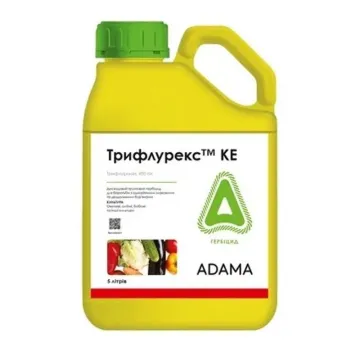
Treflan 480
Доу АгроСайенсіс С.А.С., Друзенхайм, Франція
Herbicides, Desiccants
3
2
·
4.1K
6 offers
0.6 €за 1 л
Купить

English lavender (Lavandula angustifolia Mill.), also known as common lavender, is a hardy perennial evergreen shrub belonging to the Lamiaceae family. Despite its common name, it originates from the Mediterranean region, where it has been cultivated for centuries for its aromatic properties and medicinal value.
The plant is highly valued globally for the essential oil extracted from its inflorescences. It thrives in temperate climates with long, sunny growing seasons. In agricultural settings, it requires open, well-ventilated fields to ensure proper air circulation, which helps reduce the risk of humidity-related fungal infections.
Botanically, the plant features a woody base with multiple erect stems reaching heights of 40 to 80 centimeters. The leaves are narrow, linear, and covered with fine silvery hairs, which act as a protection against intense sunlight and moisture loss. The flowers are small, arranged in whorls on spikes, showcasing colors ranging from pale blue to deep violet-purple.
Cultivation success depends on soil conditions; lavender requires alkaline, well-drained, and nutrient-moderate soils. It is remarkably drought-tolerant once established, but it cannot survive in heavy, waterlogged soils that remain wet during winter, as this leads to root decay. Professional agrotechnics include precise irrigation control and strategic pruning after the flowering season to maintain the plant's structural integrity.
Farmers must monitor for common pests like the meadow spittlebug and diseases such as Botrytis blight. Integrated pest management (IPM) is crucial to maintain high yields without compromising the organic quality of the essential oil.