Prima
Доу АгроСайенсіс С.А.С., Друзенхайм, Франція
Herbicides, Desiccants
0
0
·
4.7K
8 offers
10.5 €за 1 л
Купить

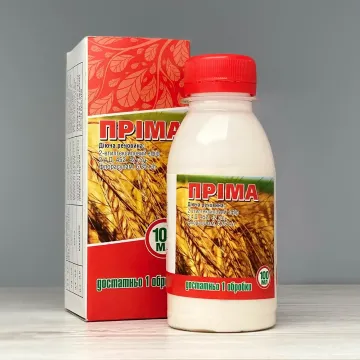
2,4-Dichlorophenoxyacetic acid, commonly known as 2,4-D, is a systemic herbicide belonging to the phenoxy chemical family. It serves as a selective agent used extensively in global agriculture to control various broadleaf weed species while sparing cereal crops and grasses.
The herbicidal action of 2,4-D is based on its role as a synthetic auxin. Upon absorption by the plant tissues, the compound induces abnormal, uncontrolled growth patterns, leading to vascular tissue collapse and rapid metabolic disruption. This "hormonal overdose" forces the weed to exhaust its resources and die within several days of exposure.
The primary crops for 2,4-D application include wheat, barley, oats, and maize. It is highly effective against a wide array of annual and perennial broadleaf weeds, such as thistle, wild mustard, pigweed, and lamb's quarters. Due to its selectivity, it is widely favored for post-emergence weed control in monocotyledonous crops.
Effective usage requires strict adherence to environmental conditions. Volatility of certain 2,4-D formulations (especially esters) can lead to drift issues, potentially damaging sensitive nearby crops like soybeans or grapes. Application should be avoided during high wind conditions and high temperatures to minimize risks of off-target movement and ensure optimal uptake.
Safety is a priority when handling this pesticide. Operators must wear full personal protective equipment to prevent skin contact or inhalation. Furthermore, 2,4-D must be applied with specialized equipment calibrated to prevent drift, and users should always consult local regulations regarding buffer zones to protect water sources and non-target ecosystems from potential contamination.