
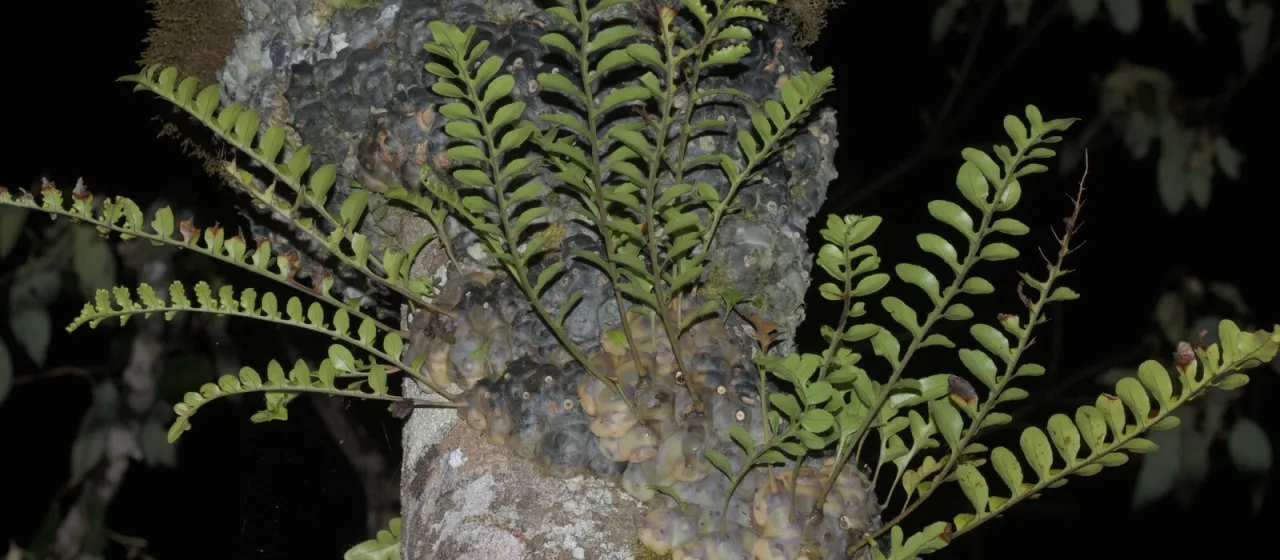
Description
Lecanopteris pumila is a distinct species of fern belonging to the Polypodiaceae family. Known primarily as an ant-fern, this plant has evolved a fascinating symbiotic relationship with ants in its native habitat. The plant develops hollow, swollen rhizomes that provide a nesting space for ant colonies, which in turn provide the plant with organic nutrients, a survival strategy common in specialized epiphytic flora.
The native range of Lecanopteris pumila is centered in the tropical regions of Southeast Asia, including parts of the Philippines and Indonesia. It typically thrives in the canopy of humid mountain forests, anchoring itself to tree trunks and branches. Due to these specific environmental preferences, cultivation outside its natural habitat is challenging and limited to specialized greenhouse environments.
Botanically, the species is defined by its robust, often contorted rhizomes that serve as water-storage organs. These structures are covered in scales and possess complex chambers. The fronds are leathery and pinnatifid, adapted to maximize photosynthesis in the dappled light of the rainforest canopy. The plant's growth rate is generally slow, making it a long-term project for dedicated enthusiasts.
Agrotechnical requirements for this fern are strict, emphasizing the need for a high-humidity environment, typically between 70% and 90%. As an epiphyte, it must never be planted in standard soil. An ideal potting medium consists of a loose mix of long-fiber sphagnum moss, orchid bark, and charcoal. Proper air circulation is critical to mimic the breezy conditions of the canopy and prevent rot.
While Lecanopteris pumila has no traditional agricultural applications, it is highly prized in the specialized horticulture trade and scientific botanical research. The primary pests are common greenhouse insects, including scale insects and mealybugs. Pathogens often target the rhizomes if the moisture levels are uncontrolled, leading to rapid rot; therefore, strict hygiene and optimal drainage are the foundations of successful husbandry.