
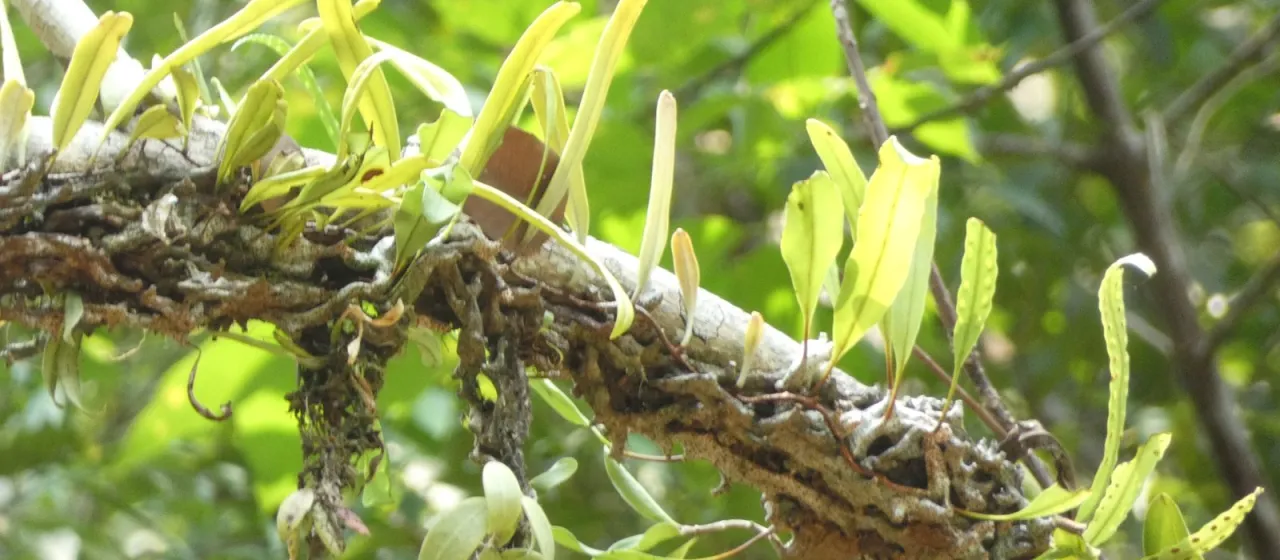
Description
Lecanopteris sinuosa is a remarkable species of fern belonging to the Polypodiaceae family. It is widely recognized as an ant-fern, or myrmecophyte, meaning it has evolved a symbiotic relationship with ants. In its natural habitat, the plant provides hollow, swollen rhizomes as nesting sites for ant colonies, which in turn protect the fern and provide it with nitrogen-rich waste materials.
The native range of this fern extends across the tropical rainforests of Southeast Asia, specifically Malaysia, Indonesia, and the Philippines. As an obligate epiphyte, it grows on tree trunks and high branches where it receives filtered sunlight. This specific ecological niche dictates the plant's need for consistent environmental conditions when grown in a botanical collection or an indoor greenhouse.
The morphology of Lecanopteris sinuosa is characterized by its rhizomes, which are fleshy, branched, and form distinct hollow chambers. The fronds are leathery and typically possess a wavy, sinuous margin, contributing to the plant's aesthetic appeal. Its unique structure is highly adapted for water storage, allowing it to survive short periods of drought in the canopy.
To successfully cultivate this species, growers must adhere to specific standards:
- Maintain ambient humidity levels above 70% at all times.
- Provide bright, indirect lighting to avoid scorching the delicate fronds.
- Ensure excellent drainage by using an airy, orchid-like substrate such as tree fern fiber or bark.
- Avoid excessive watering of the rhizome to prevent anaerobic decomposition.
Economically, Lecanopteris sinuosa is strictly a specialty ornamental crop valued by hobbyists and botanical gardens. Management of the plant requires careful attention to sanitation to prevent fungal outbreaks within the rhizome cavities. Pests such as scale insects and spider mites are the most common concerns, typically managed through manual removal or the application of organic insecticidal soaps if an infestation occurs.