
Description
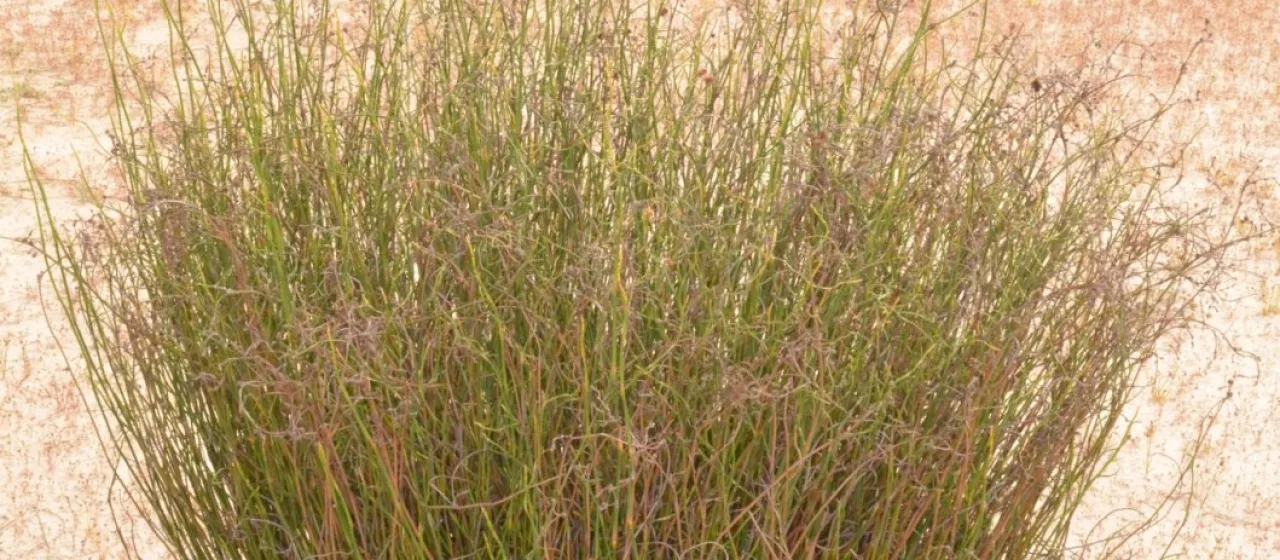
Leptocarpus disjunctus is a perennial herb belonging to the Restionaceae family. Known for its distinct structural appearance, this species is often mistaken for sedges or grasses, yet it possesses unique biological traits that distinguish it as a specialized plant from Southern Hemisphere ecosystems.
Originating from Australia, Leptocarpus disjunctus is naturally adapted to sandy soils and exposed coastal or heathland habitats. Its evolutionary history has endowed it with the ability to thrive in nutrient-poor environments, making it a resilient candidate for specific horticultural and restoration projects.
Botanically, the plant features rigid, photosynthetic culms that serve as the primary foliage, as true leaves are reduced to protective sheaths. Its root system is rhizomatous, allowing for effective stabilization of sandy substrates and facilitating gradual expansion in favorable environmental conditions.
Cultivation of this species demands excellent drainage and high light exposure. Growers should prioritize well-aerated, acidic, and low-nutrient substrates to replicate the plant's native habitat. Over-fertilization and moisture retention are the primary threats to the plant's long-term health and structural integrity.
In landscaping, Leptocarpus disjunctus is valued for its minimalist aesthetic and drought tolerance. It is frequently utilized in xeric garden designs, rockeries, and coastal landscape projects where low-maintenance, architecturally interesting vegetation is required. It remains largely resistant to common garden pests provided that drainage conditions are met.
- High drought resistance
- Thrives in sandy, nutrient-poor soil
- Architectural aesthetic for modern gardens
- Low fertilization requirements