
Description
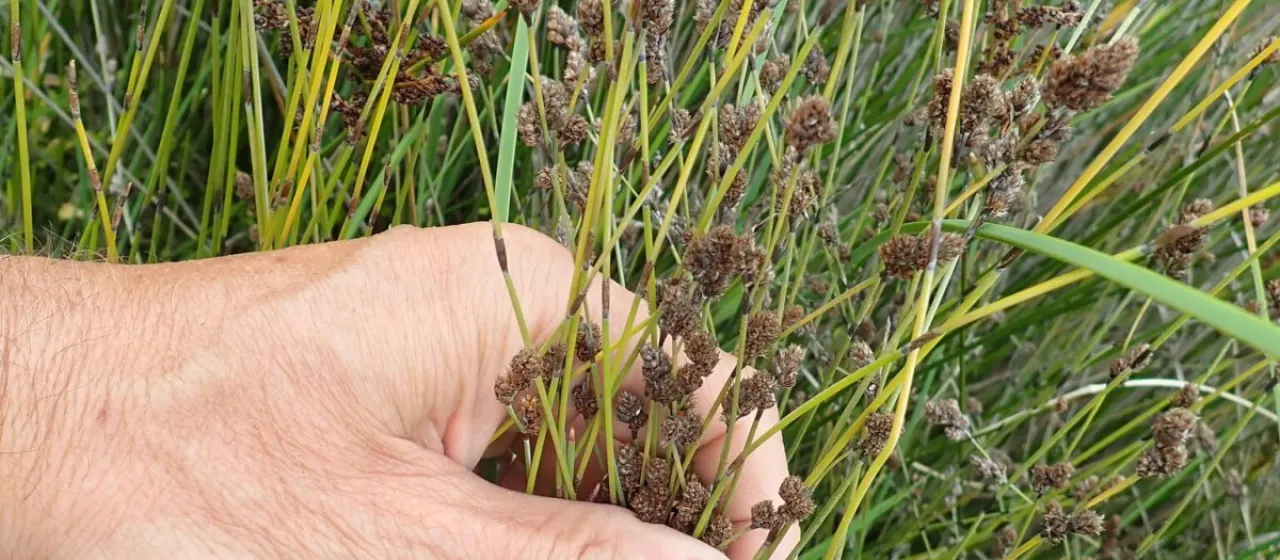
Leptocarpus similis is a perennial evergreen herbaceous plant belonging to the Restionaceae family. Often confused with sedges or rushes due to its appearance, it is highly valued for its vertical, architectural form. The plant serves as a structural element in landscapes, maintaining its aesthetic appeal throughout the entire year regardless of environmental stressors.
Native to New Zealand, this plant naturally thrives in coastal areas, marshes, and sand dunes. Within the scope of ornamental cultivation, it has become popular in regions with temperate climates. Its natural adaptation to harsh maritime environments makes it an exceptionally hardy choice for growers looking for low-maintenance vegetation capable of withstanding windy and exposed conditions.
The botanical structure of Leptocarpus similis consists of slender, erect, green-to-glaucous stems that can reach a height of approximately one meter. The true leaves are reduced to small sheaths along the stem. The root system is robust and rhizomatous, allowing the plant to spread effectively and stabilize loose substrates such as sandy or silty soils, preventing erosion in sensitive landscapes.
Regarding agricultural requirements, the plant prefers full sun exposure but can tolerate partial shade. While it thrives in moist soil conditions, it is surprisingly drought-tolerant once established. It is well-suited for acidic or neutral soils and displays remarkable tolerance to salinity, making it an ideal candidate for projects near coastal regions where other plants might struggle to survive.
The primary use of Leptocarpus similis is in landscaping and environmental restoration projects. It is frequently employed for:
- Shoreline stabilization and erosion control
- Designing low-maintenance native gardens
- Providing vertical interest in modern landscapes
- Acting as a background plant in mixed borders