
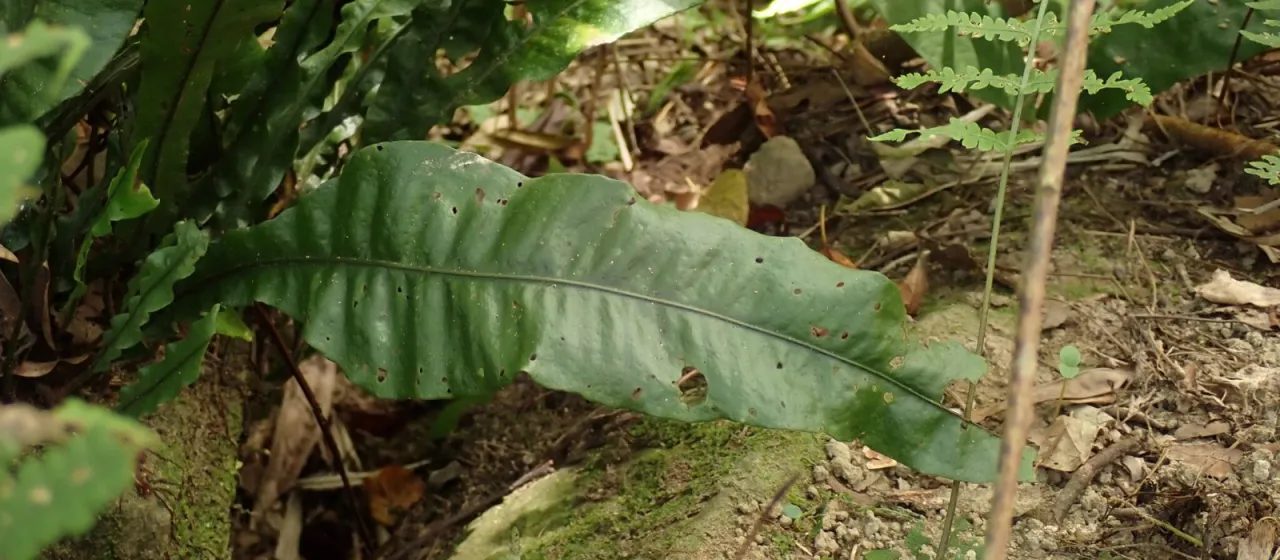
Description
Leptochilus wrightii is a perennial herbaceous plant belonging to the Polypodiaceae family. Unlike many other ferns, this species possesses a unique leaf morphology, specifically adapted to thrive in the high-humidity conditions characteristic of tropical forest understories.
The native range of this plant encompasses the humid tropical regions of Asia. In its natural habitat, it typically grows in the forest floor layer, where the dense tree canopy provides filtered light. Its distribution is limited to areas with consistently high temperatures and regular precipitation throughout the year.
Botanically, the plant is characterized by a creeping rhizome and dimorphic fronds. These leaves are divided into sterile fronds, which are responsible for photosynthesis, and fertile fronds, which bear sporangia on their undersides. This specialization is an evolutionary mechanism for survival in shaded niches.
Successful cultivation requires high air humidity (at least 70-80%) and temperatures ranging between 20 and 28 degrees Celsius. The growing medium must be loose, rich in organic matter, and provide excellent aeration while retaining enough moisture to prevent desiccation. It is critical to avoid direct sunlight, which causes scorching of the delicate leaf tissue.
In practice, Leptochilus wrightii is primarily used as an ornamental foliage plant in greenhouses and terrariums. While not a conventional agricultural crop, its biological study is significant for the breeding of resilient fern cultivars. The primary risks during cultivation involve fungal infections due to waterlogging and infestations by mealybugs or scale insects.