
Description
Chinese sprangletop (Leptochloa chinensis (L.) Nees) is an annual grass species belonging to the Poaceae family. While it plays a role in natural wetland ecosystems, it is primarily recognized in global agriculture as a highly invasive and competitive weed, particularly within rice-producing regions that utilize flooded field systems.
The plant originates from tropical and subtropical regions of Asia. Its natural range has expanded significantly over the years, and it is now found in many parts of the world where humid, warm climates prevail. It thrives particularly well in paddy fields, where its biological requirements for water and temperature are perfectly met throughout the growing season.
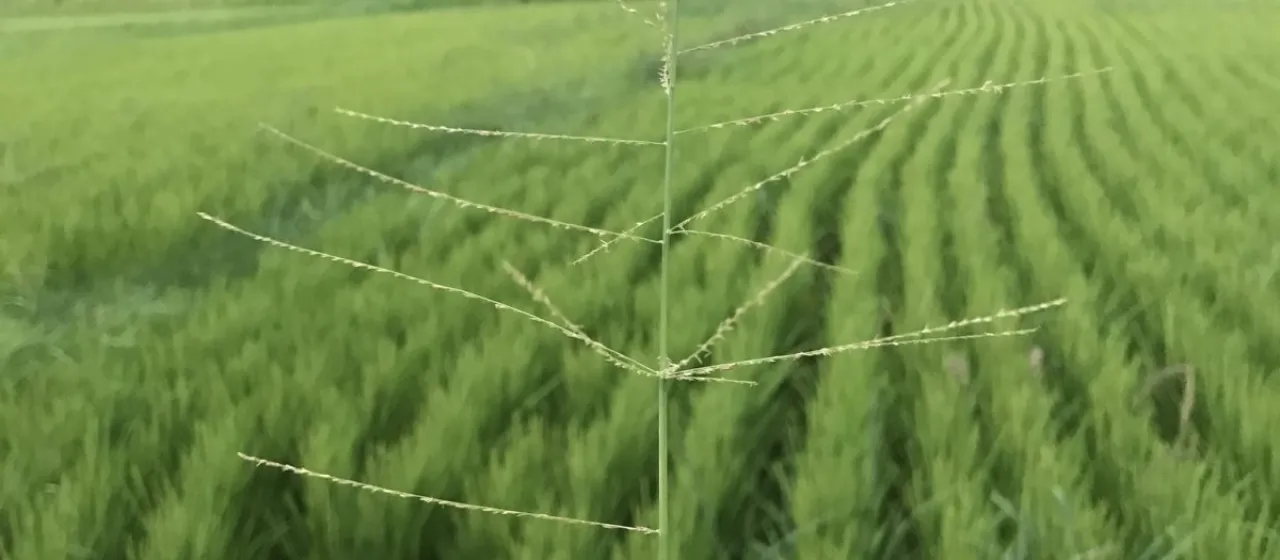
Botanically, it is a tufted annual that can grow between 30 and 100 cm in height. Its stems are often ascending, and it features flat, slender leaves. The inflorescence is a panicle consisting of several thin racemes. A single plant can produce a vast quantity of small seeds, which are easily dispersed by irrigation water, making it extremely difficult to eradicate once it establishes itself.
Cultivation requirements for this species include high moisture availability and exposure to sunlight. In terms of agronomy, managing this weed is a major challenge due to its rapid growth rate and the development of herbicide resistance. Traditional agricultural practices involve mechanical weeding, but chemical control is more common, though complicated by the necessity to protect the primary rice crop.
The economic impact is primarily destructive, as it competes for nutrients and water, directly reducing the yield of rice crops. While it has no significant role as a commercial crop, research focuses on integrated pest management (IPM) to mitigate its spread. Controlling Leptochloa chinensis remains a priority for agronomists to maintain food security in affected rice-growing areas.