
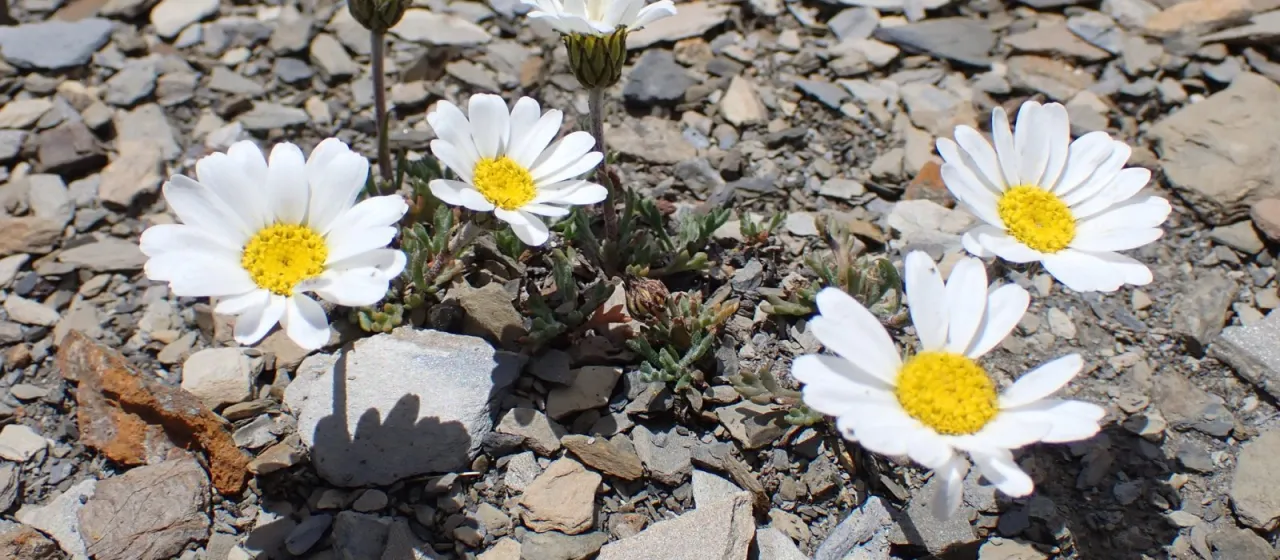
Description
Alpine Leucanthemopsis (Leucanthemopsis alpina) is a perennial herbaceous plant belonging to the Asteraceae family. In horticultural practice, it is highly valued for its ability to thrive in harsh environments, making it a staple choice for rock gardens, scree slopes, and high-altitude landscape designs.
Native to the mountainous regions of Europe, including the Alps, Pyrenees, and Carpathians, this plant has evolved to survive in extreme conditions. Its natural habitat is characterized by thin, nutrient-poor, rocky soils and cold temperatures, which makes it remarkably resilient in cultivated settings that mimic these conditions.
Botanically, the plant is distinguished by a basal rosette of finely divided, serrated leaves that persist close to the ground. The flowers are daisy-like, featuring white ray florets and yellow disk florets, which are supported by short, sturdy stems designed to resist high-altitude gusts of wind.
Cultivation requires a site with full sun and excellent drainage. The ideal substrate is a gritty, sandy, or rocky soil mixture that prevents water logging. Alpine Leucanthemopsis does not tolerate heavy, damp clay soils, as these conditions frequently lead to root rot. Minimal fertilization is recommended to maintain the plant's natural, compact habit.
While primarily used as a decorative ground cover in alpine rockeries, this species is relatively robust against common garden pests. Growers should watch for fungal issues, such as crown rot during wet winters, and monitor for aphids during the growing season. Maintenance is largely focused on ensuring proper drainage and protection from competing weeds.