
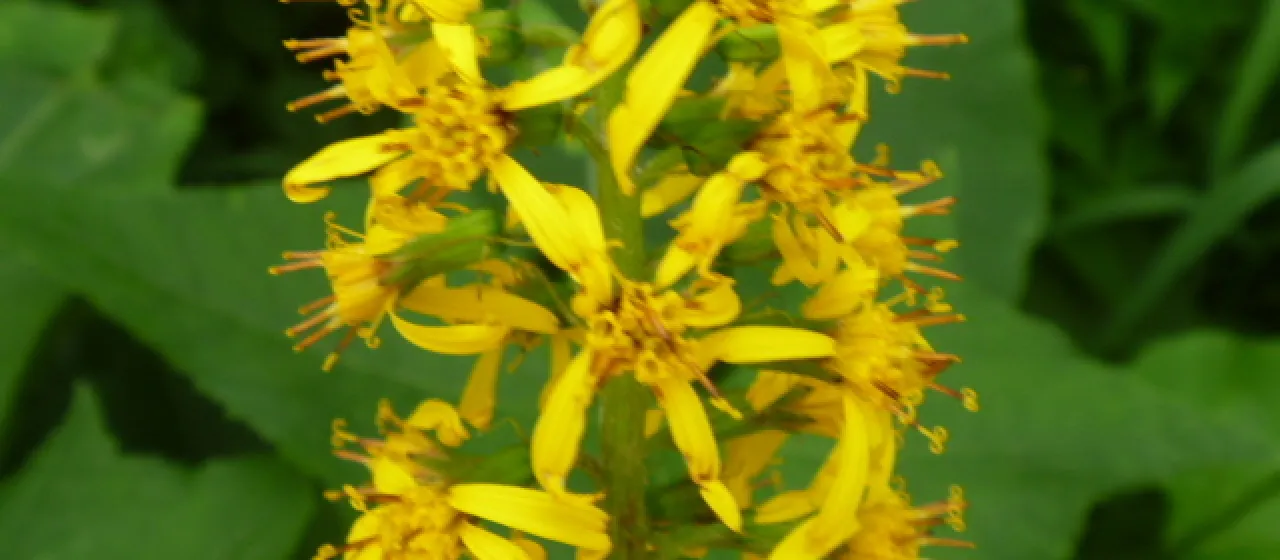
Description
Ligularia intermedia is a distinctive perennial herbaceous plant belonging to the Asteraceae family. In horticultural practice, it is highly regarded as a robust ornamental species, prized for its impressive foliage and architectural flower spikes that bring life to shaded corners of the landscape.
The native range of this species is centered in the temperate regions of East Asia. In its natural habitat, it thrives in moist environments such as riverbanks, damp meadows, and forest understories. This evolutionary background makes the plant an excellent candidate for regions requiring hardy perennials that can withstand cooler temperatures and consistent moisture.
Botanically, the plant is characterized by a dense clump of large, cordate or arrow-shaped leaves that grow from a thick rootstock. During the peak of the growing season, it produces tall, sturdy stems topped with bright yellow, daisy-like flower heads arranged in dense racemes or corymbs, creating a strong vertical element in the garden design.
To ensure optimal growth, gardeners must mimic its native environment by selecting sites with partial to full shade and moisture-retentive soils. It performs best in nutrient-rich, heavy soils like clay loam. Maintenance involves regular hydration, as the plant acts as an early indicator of drought, with leaves drooping quickly if the soil moisture levels drop significantly.
In terms of practical usage, this species is primarily used for ornamental purposes in gardens, particularly near water features or in woodland-style planting schemes. Regarding plant health, the most common pests are slugs and snails, which can cause significant damage to the lush leaves. Prevention of fungal issues involves ensuring adequate spacing between plants to maintain air circulation and avoiding overhead watering.