
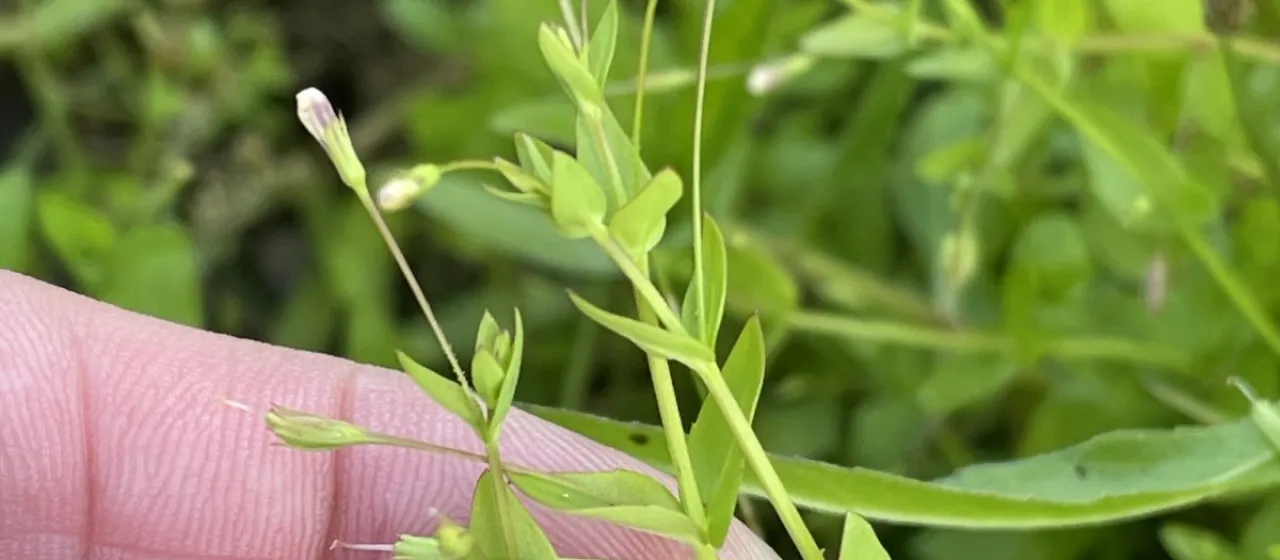
Description
Lindernia dubia, commonly known as the false pimpernel, is an annual herbaceous plant belonging to the Linderniaceae family. In agricultural contexts, it is classified as a significant weed species, particularly problematic in flooded field conditions, such as rice paddies, where it can rapidly colonize available areas.
Native to North America, Lindernia dubia has successfully established itself in various temperate regions across the globe. It is primarily found in wetland habitats, muddy banks, and irrigated agricultural lands. Its ability to spread through water channels makes it a persistent issue in regions with intensive irrigation systems.
Botanically, the plant is characterized by a low-growing, branched stem and opposite, entire to slightly serrated leaves. The flowers are distinctive, appearing on slender pedicels in the leaf axils, typically featuring a pale lavender or white corolla. The plant produces small capsules filled with tiny seeds, which are highly dispersed by water flow, facilitating its invasive spread.
Regarding agricultural requirements, Lindernia dubia thrives in saturated, nutrient-rich soils with high solar exposure. It is a heliophytic species, meaning it requires high light intensity to reach its full development potential. Consequently, crop management techniques that involve early canopy closure are effective at reducing its competitive ability in fields.
The economic impact of this species is exclusively detrimental, as it acts as a competitor to commercial crops. Management strategies are vital to maintaining field productivity. The main control measures include:
- Precision land leveling to manage water distribution.
- Strategic water level manipulation to expose and suppress weed seedlings.
- Application of selective pre-emergent or post-emergent herbicides.
- Regular inspection of irrigation infrastructure to prevent seed dispersal.
While Lindernia dubia does not serve any commercial purpose, it is susceptible to various fungal pathogens that thrive in aquatic environments, although these rarely limit its population growth significantly. Agronomists must prioritize preventive methods, as the plant's high seed production rate makes it highly resilient once established in a production site.