
Description
Smallflower halfchaff sedge (Lipocarpha micrantha) is an annual herbaceous plant belonging to the Cyperaceae family. It is recognized as a hydrophyte that thrives in environments with high moisture levels. While not traditionally grown as a commercial crop, its presence is significant in agricultural landscapes, particularly in wetland-adjacent farming, where it can act as an indicator species for soil moisture levels.
The plant is native to the Americas, ranging from North to South America. It typically colonizes wet sandy shores, riverbanks, and seasonal floodplains. Its range has expanded as a weed in disturbed wet habitats, and it often appears in agricultural settings that utilize irrigation or flood-based farming techniques. Understanding its origins helps predict its invasive potential in various climates.
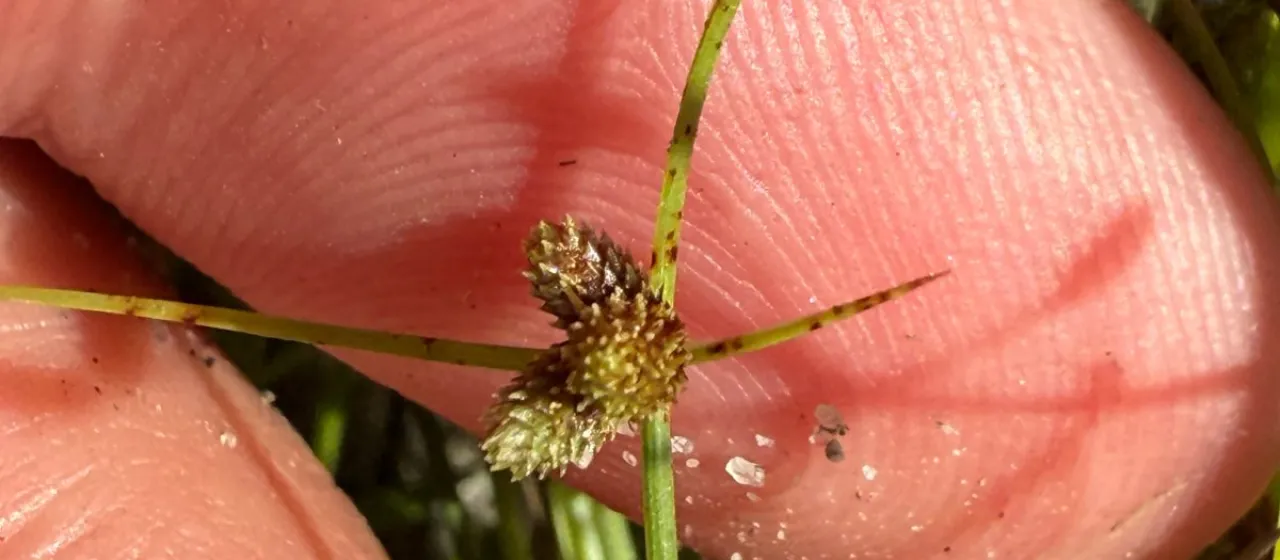
Botanically, it is characterized by its slender, grass-like leaves and distinct inflorescences composed of small, cone-shaped heads. The stems are triangular, which is a hallmark feature of the sedge family. Its roots are fibrous and relatively shallow, adapted to drawing nutrients from moist surface layers. The plant grows to modest heights, typically not exceeding 20 centimeters, which allows it to thrive in dense ground-level colonies.
Agronomic requirements for this species focus on light and moisture availability. It grows best in full sun on sandy or loamy soils with adequate aeration. Because it propagates primarily through seeds, managing it in agricultural fields requires careful control of moisture levels during the early stages of crop development. It is sensitive to prolonged desiccation but generally robust in temperate and tropical conditions.
The economic utility of Lipocarpha micrantha is minimal, though it provides ecosystem services such as soil stabilization and sediment trapping. Common threats to its development include leaf spots and fungal pathogens, especially in highly humid conditions. It is not generally subject to major pest damage that would require heavy chemical treatment, making cultural and mechanical methods the preferred way to manage its density in productive fields.